Showing posts with label young adult. Show all posts

Wednesday, 15 October 2014

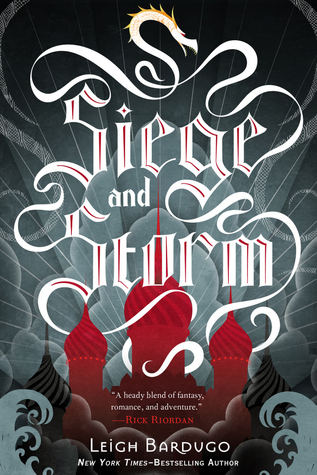
Review - Siege and Storm - Leigh Bardugo


Siege and Storm (The Grisha, #2)

Siege and Storm by Leigh Bardugo
Series: The Grisha #2
Published by Henry Holt and Co. on June 4 2013
Genres: Fantasy, Young Adult
Pages: 432
Rating: 2/5 stars
Darkness never dies. 
Hunted across the True Sea, haunted by the lives she took on the Fold, Alina must try to make a life with Mal in an unfamiliar land. She finds starting new is not easy while keeping her identity as the Sun Summoner a secret. She can’t outrun her past or her destiny for long. 
The Darkling has emerged from the Shadow Fold with a terrifying new power and a dangerous plan that will test the very boundaries of the natural world. With the help of a notorious privateer, Alina returns to the country she abandoned, determined to fight the forces gathering against Ravka. But as her power grows, Alina slips deeper into the Darkling’s game of forbidden magic, and farther away from Mal. Somehow, she will have to choose between her country, her power, and the love she always thought would guide her--or risk losing everything to the oncoming storm.
I don’t know why I decided to read this book. Well, I do, but I probably shouldn’t have. I knew going into it that the likelihood of it impressing me was miniscule. But when I saw it sitting pretty on the shelf at the library, I just couldn’t resist grabbing it and Ruin and Rising. I really regret that spur of the moment decision.

The pacing in Siege and Storm is wildly inconsistent. The first two or three chapters move at a break-neck speed (I almost felt like I was getting story whiplash it was going so quickly) and then about a third of the way through the book it takes a serious nosedive into epic slowness. The scenes on the Hummingbird just didn’t work for me. I think what got me about this section of the book is that there is just so much monotonous travelling going on. There just wasn’t much to keep my interest. The pace picked up again toward the end of the book with a very sudden and abrupt battle that I was about as prepared for as Alina and company were. The last quarter of the book was SO DISAPPOINTING to me. It got my hopes up that a certain twist was in store and that I’d get to see more of the Alina I actually find interesting, but alas, it was not to be. Siege and Storm was, in so many ways, a series of let downs.

The biggest qualm I have with this book is the characters. As you may know, I am very much a character reader. I don’t have to necessarily like a character, but if I don’t feel any connection to the characters there is zero chance I will enjoy the book. This is one of those books where I just can’t get on the same emotional level as any of the characters. Alina has moments when I think she’s totally awesome, but then she lets her guilt take over and gets very self-sanctimonious and I just have no patience for that. Mal is a complete write-off as a character. He’s so freaking boring. I’m two books in and literally the only thing I know about Mal is that he’s a good tracker. Not because he works really hard at it, he just is. Also, he’s really attractive and all of the ladies fawn over him. Lame. I have never seen any chemistry between Alina and Mal, especially compared to the chemistry she has with both the Darkling and Nicolai/Sturmhond. Sure, the chemistry she shares with them are very different, but at least there’s something. I can honestly say that I prefer the side of Alina we see when she’s around the Darkling to when she’s with Mal. When Alina is around Mal she becomes an insecure mess. The Darkling makes her feel powerful. Be honest, which would you prefer?

I was quite happy to meet Sturmhond in Siege and Storm. He’s definitely my favourite of the three main men in Alina’s life. What can I say, I’m a sucker for a charmer. He also seems a bit more complex than Mal and the Darkling. Where there is a clear indication of good versus evil when it comes to Mal and the Darkling, Sturmhond occupies the grey space in between and I’m into that.

One other niggling thing that I noticed while reading Siege and Storm is the way that Alina perceives other women. It is so unhealthy and there is a vast amount of internalised misogyny clouding her judgement. It’s particularly evident in the way that she interacts with Zoya. Every time Zoya is mentioned, some aspect of her appearance is noted. She is constantly described as beautiful and threatening, and I find it rather disconcerting. The only character who isn’t looked down upon for her beauty is Genya, and we all know what happens to her by the end of the book. It just struck me as odd that all of the men in the book are praised for being good looking, yet Alina is constantly comparing herself to other women and simultaneously putting down herself for not being pretty enough and them for being too pretty.


Because I’m already two thirds of the way through the series, I’ve decided to read Ruin and Rising, just to see how everything turns out. I figure I’ve already invested so much time and energy into this trilogy that I might as well see it through to the bitter end. I’ve read about 20 pages and so far I’m even less impressed with book 3 than I was with book 2. How promising… Hopefully things will turn around enough in the next 400 pages to make me not regret ever bothering with this series. If not, I probably won’t be reading whatever Leigh Bardugo comes up with next. It’s not you, Leigh. It’s me.

Monday, 6 October 2014

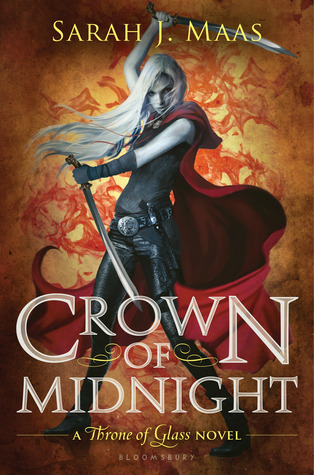
Review - Crown of Midnight by Sarah J. Maas


Crown of Midnight (Throne of Glass, #2)

Crown of Midnight by Sarah J. Maas
Series: Throne of Glass #2
Published by Bloomsbury on August 27 2013
Genres: fantasy, young adult
Pages: 420
Rating: 4/5 stars
From the throne of glass rules a king with a fist of iron and a soul as black as pitch. Assassin Celaena Sardothien won a brutal contest to become his Champion. Yet Celaena is far from loyal to the crown. She hides her secret vigilantly; she knows that the man she serves is bent on evil. 
Keeping up the deadly charade becomes increasingly difficult when Celaena realizes she is not the only one seeking justice. As she tries to untangle the mysteries buried deep within the glass castle, her closest relationships suffer. It seems no one is above questioning her allegiances—not the Crown Prince Dorian; not Chaol, the Captain of the Guard; not even her best friend, Nehemia, a foreign princess with a rebel heart. 
Then one terrible night, the secrets they have all been keeping lead to an unspeakable tragedy. As Celaena's world shatters, she will be forced to give up the very thing most precious to her and decide once and for all where her true loyalties lie...and whom she is ultimately willing to fight for.
Crown of Midnight excelled in almost all of the places where Throne of Glass failed, and it definitely earned the extra star. I’m so glad to have been able to read Throne of Glass and Crown of Midnight back to back, because if I hadn’t had Crown of Midnight on hand right after finishing Throne of Glass, I may never have bothered to read it. That said, it was so worth reading.

As you probably know, I’m a busy university student. I’m doing a double major in English and Women’s Studies, and I started this book right around the time that the fall semester (AKA the beginning of my fourth year of university) began. Let me tell you, I have had zero time for reading thus far this semester. I have managed to read all of three books in the three weeks. Over the summer, I read an average of about 2.5 books per week. Clearly, that has slowed down. The point that I’m getting at here is that amidst all of the craziness of getting back into the swing of studying nonstop, I managed to read this book in less than four days. I know that may not sound like much, but that’s a big deal right now.

This book definitely raised the stakes from Throne of Glass. It was on a higher level on both a political plane and an emotional one. I’m not ashamed to admit that it made me shed a tear or two. I got a little weepy. The character development shown in Crown of Midnight surpasses anything I could ever wish for. Celaena grows tremendously over the course of the book, and you can see her thought processes changing and she slowly learns to listen to and trust the people she cares about.


I’m going to keep this review short because I simply don’t know how to gush over this book without releasing all of the spoilers, but I am really impressed with Maas’s progression as a writer and as a storyteller. Where Throne of Glass often lacked a certain finesse, Crown of Midnight was practically flawless in execution. It flowed wonderfully, the pacing consistent and quick-moving, and the slow unraveling of the mysteries was tantalizing in a way that was completely unmatched by the smaller scale mysteries of the first book. I’m so excited to see where this story will go in Heir of Fire (which I need to get my hands on NOW). I’d also really like to read The Assassin’s Blade, though I’m typically not a fan of prequels or add-in short stories/novellas. I’ve heard great things about these ones, and I might just order the whole series (to date) on my next pay day.

Friday, 3 October 2014

Review - Throne of Glass by Sarah J. Maas


Throne of Glass (Throne of Glass, #1)

Throne of Glass by Sarah J. Maas
Series: Throne of Glass #1
Published by Bloomsbury on August 7 2012
Genres: fantasy, young adult
Pages: 404
Rating: 3/5 stars
After serving out a year of hard labor in the salt mines of Endovier for her crimes, 18-year-old assassin Celaena Sardothien is dragged before the Crown Prince. Prince Dorian offers her her freedom on one condition: she must act as his champion in a competition to find a new royal assassin. Her opponents are men-thieves and assassins and warriors from across the empire, each sponsored by a member of the king's council. If she beats her opponents in a series of eliminations, she'll serve the kingdom for three years and then be granted her freedom.  
Celaena finds her training sessions with the captain of the guard, Westfall, challenging and exhilirating. But she's bored stiff by court life. Things get a little more interesting when the prince starts to show interest in her... but it's the gruff Captain Westfall who seems to understand her best.  
Then one of the other contestants turns up dead... quickly followed by another. 
Can Celaena figure out who the killer is before she becomes a victim? As the young assassin investigates, her search leads her to discover a greater destiny than she could possibly have imagined.
I’ve been hearing about the Throne of Glass series all over the blogosphere for as long as I can remember (basically since 2012, when it was published), but I never got into it. Why, I have no idea, considering it is full of things I love, namely badass assassins and political fantasy. Yes please. However, I have had to take this book out of the library on three separate occasions before I was finally able to get past the first fifty pages. I just wasn’t feeling it.

I think that this book suffers from a rather weak opening, but it definitely builds as the book progresses. I grew to really like Celaena – it’s a nice change to see a YA protagonist who isn’t self-deprecating and is fully aware of how amazing she is. Celaena has her flaws, but that’s what makes her so dynamic and interesting to read about. I was also a humungous fan of the fledgling friendship between Celaena and Nehemia. I think that friendship between girls in YA is incredibly important and it was so refreshing to see that come about on the pages of Throne of Glass. Honestly, I’m quite enamoured with Nehemia all on her own; she’s a seriously ballsy lady.

There is what might be considered a love triangle in this book, which I wasn’t particularly pleased with. There’s some killer romantic/sexual tension between Celaena and the captain of the guard, Chaol, but there is also a weird romance between Celaena and the crown prince, Dorian, which I was less fond of. I do like the way that Celaena and Dorian’s relationship grew and changed over the course of the book, and I’m quite happy with where they left off at the end.

The one thing I found rather lacking in Throne of Glass was the action. It simply wasn’t as action-packed as I was expecting. There was a lot of reading and walking and running, but only a few real high stakes scenes stick out to me. I found that Celaena, for all her confidence regarding her abilities as an assassin, didn’t really do anything to live up to her reputation. She wasn’t as impressive as I wanted her to be. I also thought that the mystery wasn't as breath-taking and suspenseful as it should have been. I never worried for the safety of any of the main characters, nor was I particularly panicked to find out the identity of the murderer.


On the whole, Throne of Glass wasn’t a bad book, and it definitely had its interesting moments, but it wasn’t up to the standard I hold for fantasy books (by which I mean it wasn’t Froi of the Exiles calibre excellence). It was a decent introduction to the series, but I definitely think that things will improve as the tale progresses. The way that the first chapter or two were the shaky beginnings to this novel, I believe Throne of Glass stands as the shaky beginning to what will amount to an overall solid series.

Friday, 26 September 2014

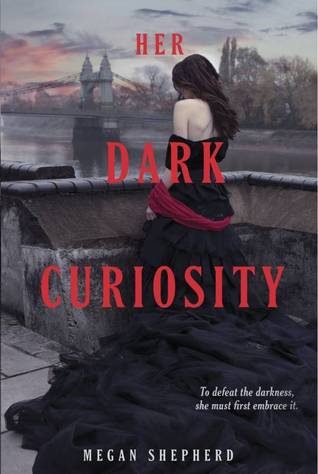
Review - Her Dark Curiosity by Megan Shepherd


Her Dark Curiosity (The Madman's Daughter, #2)

Her Dark Curiosity by Megan Shepherd
Series: The Madman’s Daughter #2
Published by Balzer + Bray on January 28 2014
Genres: horror, historical fiction, young adult
Pages: 420
Rating: 3/5 stars
To defeat the darkness, she must first embrace it. 
Months have passed since Juliet Moreau returned to civilization after escaping her father's island—and the secrets she left behind. Now, back in London once more, she is rebuilding the life she once knew and trying to forget Dr. Moreau’s horrific legacy—though someone, or something, hasn’t forgotten her. 
As people close to Juliet fall victim one by one to a murderer who leaves a macabre calling card of three clawlike slashes, Juliet fears one of her father’s creations may have also escaped the island. She is determined to find the killer before Scotland Yard does, though it means awakening sides of herself she had thought long banished, and facing loves from her past she never expected to see again. 
As Juliet strives to stop a killer while searching for a serum to cure her own worsening illness, she finds herself once more in the midst of a world of scandal and danger. Her heart torn in two, past bubbling to the surface, life threatened by an obsessive killer—Juliet will be lucky to escape alive. 
With inspiration from Robert Louis Stevenson’s The Strange Case of Dr. Jekyll and Mr. Hyde, this is a tantalizing mystery about the hidden natures of those we love and how far we’ll go to save them from themselves.
I probably shouldn’t have read this book.

I was drawn in by the near-pristine beauty of it at the library – I don’t often encounter library books that look brand new, and I was tricked by the prettiness. It’s too bad that the actual content of these books isn’t as great as their gorgeous covers.

I had high hopes for Her Dark Curiosity, though I’m not entirely sure why. I didn’t particularly enjoy The Madman’s Daughter, for a variety of reasons.  Namely, Juliet’s idiocy and the completely unnecessary love triangle. But I thought, maybe book two will be better. Maybe Juliet will start to use her brain and stop whining all the time and kick those stupid miserable boys to the curb. Also, I was under the (incorrect) assumption that 1/3 of said love triangle was dead, because I’m an idiot who indulges in wishful thinking.

But oh no. None of my hopes were answered by this book. I was delighted to find that this book was supposed to be loosely based on/inspired by The Strange Case of Dr. Jekyll and Mr. Hyde. I’m a big fan. Unfortunately, they really meant loosely. There are a few elements of Jekyll and Hyde present, but it’s minimal. The reintroduction of the love interest who isn’t Montgomery (I want to say his name is William or Edward, because everyone in Victorian London was called William or Edward) wasn’t much of a shocker, and I honestly don’t think it even merits a spoiler tag. Let me know if you disagree, but it was pretty obvious, though I tried to convince myself otherwise in case sheer willpower prevented it from happening. Sigh. The love triangle really gets amped up in this book. Compared to Her Dark Curiosity, it is merely a slight annoyance in The Madman’s Daughter. There is just so much drama between Juliet and Montgomery and William-Edward and I don’t understand it at all because they’re both absolute dickheads! I’ll pass, thank you.

The ‘plot’ of Her Dark Curiosity is surprisingly sparse. I honestly don’t remember much of the plot that didn’t revolve around a) the love triangle, b) Juliet’s angst over her condition/finding a remedy, or c) further angst over William-Edward’s escalating murderous split personality disorder. I think the main problem I have with sympathizing with these plights is that I just completely disagree with everything that Juliet stands for. If I were in her shoes, William-Edward would be properly dead by now (and I would have zero desire to bring him back to life Frankenstein-style, thank you very much!). Oh! I remembered one other plot-y thing – Juliet discovers that she’s caught up in a big ol’ conspiracy and then (SPOILER) kills a bunch of people using electricity and lab creatures. She also scars her best (well, only) friend for life in the process, but who needs friends when you have Montgomery and William-Edward, right??

Given the nature of this review, it might be surprising that I gave this book three stars. I actually did enjoy certain parts of the book. I’m a big fan of Shepherd’s writing style. It is very descriptive without turning purple, and I think she really succeeds in creating a neo-Gothic novel, in style if not in form. I also really love Juliet’s dark side. She doesn’t let it out as often as I’d like, but I think that the fact that she has a serious violent streak is wonderful. I think that she could be a truly remarkable character if she just toned down the altruism a little bit. She reminds me a bit of Allie from Julie Kagawa’s Blood of Eden trilogy in that sense. She has the potential to be a total badass, but she is just too nice.


Considering how much grief this series has caused me, you’d think I’d back out and abstain from the likely torment of A Cold Legacy, but you would be wrong. I’ve already invested enough time in this series that I might as well see it through, right? Besides, maybe Frankenstein William-Edward will be less angsty than the current version. On a side note: how many times can this dude be killed off? WHY DON’T YOU JUST TAKE THE HINT AND STAY DEAD? NOBODY LIKES YOU. I am interested to see the setting shift once again, this time from urban London to the Scottish countryside. I think that setting is definitely one of Shepherd’s strong suits.

Monday, 22 September 2014

Review - Keeping You a Secret by Julie Anne Peters


Keeping You a Secret

Keeping You a Secret by Julie Anne Peters
Series: Standalone
Published by Little, Brown and Company on May 4 2005
Genres: contemporary, young adult, LGBT
Pages: 250
Rating: 4/5
With a steady boyfriend, the position of Student Council President, and a chance to go to an Ivy League college, high school life is just fine for Holland Jaeger. At least it seems to be. But when Cece Goddard comes to school, everything changes. Cece and Holland have undeniable feelings for each other, but how will others react to their developing relationship? This moving love story between two girls is a worthy successor to Nancy Garden's classic young adult coming out novel, Annie on My Mind. With her characteristic humor and breezy style, Peters has captured the compelling emotions of young love.
As you may or may not have noticed, I read pretty much any and every lesbian YA novel that comes my way. Because I can. This one has been on my radar for years – I mean, Julie Anne Peters is a mainstay of queer YA contemporaries, and this is one of her more popular books. Possibly the most popular? I’m not too sure. Regardless, there is a distinctly familiar tone to this book that leads me to think that I may have read it in high school and completely forgotten doing so. It happens.

Keeping You a Secret isn’t the most creative book in the world, but it is an important book nonetheless. Given that it was published nearly ten years ago, I’m pretty impressed with it. I can’t say that I’d be pleased to read something with this plot if it were a new release, but I’ll get into that in a moment.

The main draw of Keeping You a Secret, in my opinion, is the relationships between its characters. To start out, we have the main character, Holland. Holland has a lot of very complicated relationships – her boyfriend, who feels more like an obligation than a pleasure; her friends, who are sometimes judgemental and with whom Holland doesn’t feel comfortable sharing her true feelings; her mom, newly remarried and suddenly preoccupied with a ‘new’ family; her stepsister, a Goth whom Holland just can’t relate to (not that she really wants to). What I really loved about this book was that it went beyond the conventions of a simple love story – while the blooming love between Holland and Cece takes center stage, there is much more going on in Holland’s life. She is constantly navigating how to manage her relationships without throwing things off balance.

Holland’s relationship with her mother is one of the best and hardest parts of this book. After a lot of sneaking around with Cece and trying to keep the lid on their relationship, Holland’s mother finds out in a not-so-ideal way. Her reaction is absolutely terrifying. Holland’s mom has the reaction that every gay child has nightmares about. It isn’t unexpected – upon meeting Cece for the first time, she demands that Holland stop being friends with her. Her homophobia isn’t well hidden, but it is still shocking to see how she treats her own daughter. Just thinking about it makes my eyes well up. I don’t want to give away the details, but Holland’s life is plunged into a low that most people cannot relate to. The sad truth is that Holland’s circumstances are all too common for LGBT youth with bigoted parents.

The issue I have with Keeping You a Secret is that it is very middle-of-the-road. I’ve read books worse, but I’ve also read many books that are much, much better. The writing is mediocre and simplistic, which is good for readability but bad for memorability. I was never completely immersed in the story, mostly due to the fact that it was very formulaic and clichéd in many ways. I also found Cece to be a rather two-dimensional love interest, which was off-putting and disappointing. As I said before, I think that this is a very important book, but there are better LGBT YA books out there (Malinda Lo’s books are marvellous, The Miseducation of Cameron Post by Emily M. Danforth is wonderful, I’ve heard very great things about Everything Leads to You by Nina LaCour, even Peters’ newest release Lies My Girlfriend Told Me sounds more innovative).


If like me you’re someone who devours every book about queer teenage girls that you can find, this one is worth reading, but if you’re less passionate about the subject, this might be one to skip.

Friday, 19 September 2014

Review - The Queen of the Tearling by Erika Johansen


The Queen of the Tearling (The Queen of the Tearling, #1)
The Queen of the Tearling by Erika Johansen
Series: The Queen of the Tearling #1
Published by Harper on July 8 2014
Genres: Dystopian, Fantasy, Young Adult
Pages: 448
Rating: 2.5/5 stars
On her nineteenth birthday, Princess Kelsea Raleigh Glynn, raised in exile, sets out on a perilous journey back to the castle of her birth to ascend her rightful throne. Plain and serious, a girl who loves books and learning, Kelsea bears little resemblance to her mother, the vain and frivolous Queen Elyssa. But though she may be inexperienced and sheltered, Kelsea is not defenseless: Around her neck hangs the Tearling sapphire, a jewel of immense magical power; and accompanying her is the Queen’s Guard, a cadre of brave knights led by the enigmatic and dedicated Lazarus. Kelsea will need them all to survive a cabal of enemies who will use every weapon—from crimson-caped assassins to the darkest blood magic—to prevent her from wearing the crown. 
Despite her royal blood, Kelsea feels like nothing so much as an insecure girl, a child called upon to lead a people and a kingdom about which she knows almost nothing. But what she discovers in the capital will change everything, confronting her with horrors she never imagined. An act of singular daring will throw Kelsea’s kingdom into tumult, unleashing the vengeance of the tyrannical ruler of neighboring Mortmesne: the Red Queen, a sorceress possessed of the darkest magic. Now Kelsea will begin to discover whom among the servants, aristocracy, and her own guard she can trust.
I’m glad to say that I didn’t hate this book as much as most of my fellow bloggers seem to, but it definitely wasn’t what it was pitched to be. I was lucky enough to know going into it that it wasn’t a straight-up fantasy, but a strange dystopian fantasy hybrid in which an event called The Crossing occurred, during which most modern “luxuries” a la medicine and electricity were lost. Now, what exactly the Crossing was is never explained in the nearly 500 pages of this book. I imagine it may be explained in subsequent books, but it was kind of a mind fuck.

There is some serious logic fail going on in this book. There is talk of other nations being capable of plastic surgery yet the Tearling doesn’t even have the most basic medicine. They don’t even have printing presses. It’s your basic quasi-medieval fantasy setting with a big ol’ FUCK YOU twist thrown in for good measure. And it doesn’t really work. The Queen of the Tearling would have been a thousand times more enjoyable if it wasn’t such a weird setting.
 kidding me
The characters leave a lot to be desired as well. Kelsea, the main character and incumbent Queen of the Tearling, is rash and impulsive. She doesn’t think things through, which is a terrible trait in a Queen. She talks about wanting to do the best for her kingdom, yet she doesn’t actually consider the consequences of her actions. For instance, when she learns about the crown-condoned slave trade between the Tearling and neighbouring kingdom Mortmesne, she immediately releases all of the prisoners, hires a bunch of them on as her personal staff, and burns the cages used to transport them. She doesn’t care that the Queen of Mortmesne is infinitely more powerful than she is and that she will be slightly insulted to discover her shipment of slaves has not been delivered. I agree that something had to be done to put a stop to the agreement between the Tearling and Mortmesne, but Kelsea’s solution was far from intelligent.

She is also very judgemental. She believes herself to be plain and unattractive (based on a glimpse of herself in a puddle when she was about fifteen) and is very insecure because of it. She takes extensive note of the appearances of everyone she meets and compares herself to them endlessly. There is one particularly offensive scene in which Kelsea mentally chastises an aging woman for believing herself to be beautiful. How dare this lady who is in her fifties or sixties feel confident in her own appearance??!! Kelsea also spends a lot of time thinking about how men don’t find her attractive, especially one outlaw she encounters twice. She is really hung up on this guy and how he once said that she wasn’t his type. I was glad to find that he only makes two appearances, as I really did appreciate how little romance came into play in this book. I can only imagine it will become a more central focus as the series progresses, because that’s usually how these things go.

Also, everyone in this book is completely incompetent when it comes to their jobs. Kelsea is a horrible queen, her head guard allows her to be stabbed in the back, an assassin manages to catch her unattended in the bath. It’s just a major clusterfuck and everyone deserves to be fired. There is also the issue of the climactic scene being resolved by Kelsea’s magical necklaces. I really don’t like when objects are the solutions to problems. It’s just too convenient. I’d much rather have the characters use their actual brains – they have them for a reason!

My final note is that I really wish this book had better representation of women. There are a handful of women gracing the pages, but they’re almost all disappointing. First there is Carlin, Kelsea’s cold and aloof guardian with whom Kelsea had a very strained relationship because Carlin didn’t feel like she could allow herself to show Kelsea love. WHAT THE FUCK KIND OF LOGIC??? Then there’s the evil queen of Mortmesne, known only as The Red Queen. She’s a stereotype if I’ve ever seen one – leaning heavily on magic and fear to control her kingdom, she is the epitome of the evil seductress. The most interesting female character is a beautiful young woman formerly “owned” by Kelsea’s gross uncle. Unfortunately she doesn’t play a very big role in the novel. I suppose I just wish Kelsea had a friend or a counsel or someone to bounce ideas off of aside from Mace. Whose job is to protect her, not to help her make political decisions.  
 disappointed

It may seem like I hated this book, but I didn’t. I liked the writing and I am interested to see what Johansen does with the strange combination of story elements she’s pulled together. It may have had it’s seriously dumb moments, but The Queen of the Tearling wasn’t all bad.

Monday, 15 September 2014

Review - How Zoe Made Her Dreams (Mostly) Came by Sarah Strohmeyer


How Zoe Made Her Dreams (Mostly) Come True
How Zoe Made Her Dreams (Mostly) Come True by Sarah Strohmeyer
Series: Standalone
Published by Balzer + Bray on April 23 2013
Genres: Contemporary, Young Adult
Pages: 320
Rating: 3/5 stars
When cousins Zoe and Jess land summer internships at the Fairyland Kingdom theme park, they are sure they've hit the jackpot. With perks like hot Abercrombie-like Prince Charmings and a chance to win the coveted $25,000 Dream & Do grant, what more could a girl want? 
Once Zoe arrives, however, she's assigned to serve "The Queen"-Fairyland's boss from hell. From spoon-feeding her evil lapdog caviar, to fetching midnight sleeping tonics, Zoe fears she might not have what it takes to survive the summer, much less win the money. 
Soon backstabbing interns, a runaway Cinderella, and cutthroat competition make Zoe's job more like a nightmare than a fairy tale. What will happen when Zoe is forced to choose between serving The Queen and saving the prince of her dreams?
This is a difficult review to write simply because a lot of time has passed since I read this book and it honestly hasn’t left a very strong impression on me. I remember most of the events of the book, but it didn’t elicit a single strong emotion from start to finish. I wasn’t expecting How Zoe Made Her Dreams (Mostly) Come True to be an earth-shattering, life-changing book, but I did expect a little bit more gravity and impact than what I received.

How Zoe Made Her Dreams (Mostly) Come True follows cousins Zoe and Jess as they spend the summer between eleventh and twelfth grade (AKA junior and senior year if you’re American) interning at a fairy-tale theme park in New Jersey. The relationship between Zoe and Jess was rather refreshing in that they have been best friends practically since birth and they are absolutely, entirely supportive of each other in every way. These girls have a friendship to be envied. The only problem is that they are both itching to receive the $25,000 cash prize given to two exemplary interns at the end of each summer: one girl and one boy. Zoe needs the money to pay off medical bills, while Jess needs it due to her parents financial crisis and its effect on her dream of attending NYU. The solution to this problem is kind of cheesy and all too convenient, but it fits the book. This book is very much about fairy-tale endings and happily ever afters, and while that may bother the more cynical readers (re: me), it isn’t entirely a bad thing. It can be nice to see everything turn out okay in the end every now and then.

The romance in How Zoe Made Her Dreams (Mostly) Come True is pretty predictable, but cute. It’s misdirected by a crush on a not-so-nice guy and Zoe spends a large portion of the book completely blind to Noah’s charms. The scene at the lake/pond (I have the worst memory!) was adorable. So sweet.

The part of the book I struggled the most with was Zoe’s job. She was basically an assistant, even though that’s clearly not what she signed up for, and she did her job almost entirely without complaint despite the fact that the Queen, who I think is supposed to be like the park manager, was legitimately insane. I wouldn’t have made it two days in that job, especially given that it was completely unexpected. It bothered me that the Queen never seemed to be doing any real work. She had serious entitlement issues and I found myself spending most of the book longing to punch her in the ovaries. It just didn’t add up that this park could be run by one inept crazy woman and a bunch of teenagers (plus some security guards who didn’t really seem to care about their jobs at all). It was very unbelievable that a park could have any semblance of efficiency with such a flawed employee framework. It annoyed me and honestly affected my enjoyment of the book. I don’t like when things don’t make sense.


Honestly, I probably won’t read any more of Sarah Strohmeyer’s books. This one was the only one that really interested me, and it was a fluffy heap of cotton candy of a book, which I’ll repeat, isn’t always a bad thing. It just didn’t work for me. I think that has a lot to do with target audience – I kind of felt like Strohmeyer was dumbing her book down in a way. Maybe not even intentionally, but it still gave me a sense that there was something missing.

Friday, 12 September 2014

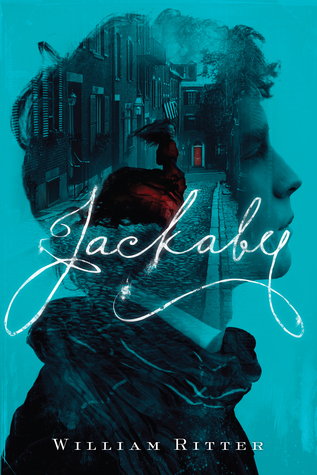
Review - Jackaby by William Ritter


Jackaby

Jackaby by William Ritter
Series: Standalone
Published by Algonquin Young Readers on September 16 2014
Genres: paranormal, historical fiction, young adult
Pages: 304
Rating: 3 stars
Newly arrived in New Fiddleham, New England, 1892, and in need of a job, Abigail Rook meets R. F. Jackaby, an investigator of the unexplained with a keen eye for the extraordinary--including the ability to see supernatural beings. Abigail has a gift for noticing ordinary but important details, which makes her perfect for the position of Jackaby’s assistant. On her first day, Abigail finds herself in the midst of a thrilling case: A serial killer is on the loose. The police are convinced it’s an ordinary villain, but Jackaby is certain it’s a nonhuman creature, whose existence the police--with the exception of a handsome young detective named Charlie Cane--deny. 
Doctor Who meets Sherlock in William Ritter’s debut novel, which features a detective of the paranormal as seen through the eyes of his adventurous and intelligent assistant in a tale brimming with cheeky humor and a dose of the macabre. 
As you probably know, Jackaby has been described as a cross between Sherlock and Doctor Who. Unlike most people, I was somewhat wary of this comparison. Don’t get me wrong, I like Doctor Who and I’ve seen the first two seasons of BBC’s Sherlock (though Elementary is superior in every possible way). The problem that these two shows share is that they are both led by the same misogynistic pig of a showrunner: Steven Moffat. This guy is an absolute tool. He’s responsible for running Doctor Who right into the ground, and he’s a self-congratulating, arrogant, pompous jerk-off. Clearly this is something I feel strongly about.

So! Coming back to Jackaby – I was interested to see how Ritter would put his own spin on the commonalities between Sherlock and Doctor Who and whether he would manage to allay some of the more offensive aspects of the two shows he is clearly pulling inspiration from. And yes I know that both Sherlock (the original stories and the franchise) and Doctor Who existed long before Moffat came around, but upon reading this book it is obvious that BBC Sherlock and Moffat’s era of DW are Ritter’s primary inspirations.

Thankfully, Jackaby is a pretty woman-friendly novel. It didn’t strike me as particularly offensive in any way, which I am grateful for. However, I did find it lacking in a few other ways. Though the main character, Abigail, has her interesting points, I felt that she lacked in depth. She is very trusting of the people around her – she is a young woman all alone on an unfamiliar continent in the late Victorian period and she struck me as incredibly naïve and accepting. Rather than doing any planning, Abigail whirled from event to event without any real agency. The only times she showed any backbone were when she ineffectually threw books at the villain and when she argued with Jackaby at the end of the book. For the most part, she just went with whatever was going on around her without much question. I found her almost instant acceptance and trust in Jackaby very unrealistic. I find it hard to believe that a woman in her position would be so unguarded.

I also found Jackaby trying as a character. He was incredibly inconsistent. It was as though Ritter was attempting to combine Sherlock Holmes and the Doctor into the same character, but it failed completely. His eccentric nature was irritating rather than endearing, and he constantly bounded between the positivity of the Doctor and the misanthropy of Sherlock. It was exhausted and simply didn’t make sense.

The three other principle characters – Charlie Cane, Jenny, and Detective Marlowe – are very hollow. We know very little about any of them beyond their surface characteristics. The semi-romance between Charlie and Abigail is very stilted and hard to support. I have no idea what exactly Abigail liked about Charlie, and vice versa.

Finally, the supernatural elements lacked finesse. The mystery was incredibly obvious (I figured out who the villain was the first time he was introduced) and the mythology just wasn’t that interesting. I did like how magical creatures were everywhere, but I wish there was an explanation for why Jackaby happened to be able to see what no one else could. It struck me as all too convenient that only one person in the entire world had the ability to witness the paranormal creatures of the world.


Though I enjoyed reading this book and didn’t find it grossly appalling, I find that a closer examination is poking holes all over the text and exposing more and more things that just didn’t add up for me. I wouldn’t tell anyone not to read this, but I don’t think I’d purchase it either. It just wasn’t as good as it could have been, and I found it rather disappointing as a whole.

Monday, 8 September 2014

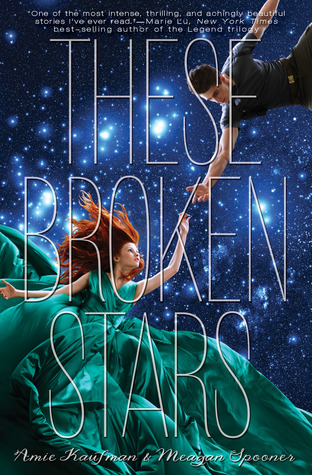
Review - These Broken Stars by Amie Kaufman & Meagan Spooner


These Broken Stars (Starbound, #1)

These Broken Stars by Amie Kaufman & Meagan Spooner
Series: Starbound #1
Published by Disney Hyperion on December 10 2013
Genres: Science Fiction, Young Adult, Space
Pages: 374
Rating: 2/5 stars
It's a night like any other on board the Icarus. Then, catastrophe strikes: the massive luxury spaceliner is yanked out of hyperspace and plummets into the nearest planet. Lilac LaRoux and Tarver Merendsen survive. And they seem to be alone.  
Lilac is the daughter of the richest man in the universe. Tarver comes from nothing, a young war hero who learned long ago that girls like Lilac are more trouble than they’re worth. But with only each other to rely on, Lilac and Tarver must work together, making a tortuous journey across the eerie, deserted terrain to seek help.  
Then, against all odds, Lilac and Tarver find a strange blessing in the tragedy that has thrown them into each other’s arms. Without the hope of a future together in their own world, they begin to wonder—would they be better off staying here forever? 
Everything changes when they uncover the truth behind the chilling whispers that haunt their every step. Lilac and Tarver may find a way off this planet. But they won’t be the same people who landed on it.
These Broken Stars tells the story of privileged teenager Lilac LaRoux and lower-class soldier Tarver Merendsen, who are essentially shipwrecked on an isolated planet with no means of communication and no other survivors. It isn’t the most exciting premise and doesn’t offer a particularly insightful look into class politics, but I’ll admit that I really didn’t expect it to.

When Tarver meets Lilac, he is drawn to her because he glimpses her in a moment when she is not acting like the society dame she is expected to be. They have a short and unmemorable conversation before parting ways, and when they meet again Lilac is with her friends and realizes that she needs to more of less “put Tarver in his place”. Not because she wants to, of course, but because she’s protecting him. Duh.
Erlich Smack
What I wanted to do to Lilac
I was put off by both of the main characters from the very beginning of the story. Tarver is judgemental and obtuse while Lilac has been completely brainwashed by her status. She lies and manipulates people and then tries to excuse it because she’s protecting them. It’s ridiculous. The only useful skill Lilac has is an extensive knowledge of electrical circuitry, which saves her and Tarver from burning up with their spaceship, the Icarus (because it’s SUCH a great idea to name your spaceship after a figure of Greek mythology who succumbs to his own hubris).

Things improved in the characterisation department after the crash, but I still found myself agitated by the characters. Lilac in particular really grows throughout their journey, but there is a major event at the end of the book that absolutely ruined everything good this book had going for it. I just couldn’t take it seriously anymore and I honestly felt kind of betrayed. I stopped caring about what happened altogether. I found Tarver kind of irritating if only because he read as completely unrealistic. He never really had any flaws and I’m not down with that.

I was also unimpressed by the resolution to the “mystery” behind the spectral voices and visions plaguing Lilac and Tarver after the crash. I think that’s just a matter of personal preference, but I just didn’t like it. The world-building was also lackluster in that it was more or less non-existent. I know literally nothing about the society Kaufman and Spooner apparently created. I also thought the password for the locked door that they couldn’t figure out for days and days was ABSOLUTELY RIDICULOUS. It was pretty damn obvious.
 Bang My Head
The writing was pretty solid – I thought there were some beautiful passages and I didn’t find anything glaringly awful. However, I will say that I wish there was more of a masculine edge to Tarver’s narrative. His voice was very similar to Lilac’s as far as language goes.


I highly doubt I’ll be picking up the next book in this series, but who knows. I’m nothing if not a glutton for punishment. At least it wasn’t as bad as Taken!

Monday, 18 August 2014

ARC Review - Tell Me Again How a Crush Should Feel by Sara Farizan


Tell Me Again How a Crush Should Feel: A Novel
Tell Me Again How a Crush Should Feel by Sara Farizan
Series: Standalone
To Be Published by Algonquin Young Readers on Oct 7 2014
Genres: LGBT, Young Adult, Contemporary
Pages: 304
Rating: 4/5 stars
High-school junior Leila has made it most of the way through Armstead Academy without having a crush on anyone, which is something of a relief. Her Persian heritage already makes her different from her classmates; if word got out that she liked girls, life would be twice as hard. But when a sophisticated, beautiful new girl, Saskia, shows up, Leila starts to take risks she never thought she would, especially when it looks as if the attraction between them is mutual. Struggling to sort out her growing feelings and Saskia's confusing signals, Leila confides in her old friend, Lisa, and grows closer to her fellow drama tech-crew members, especially Tomas, whose comments about his own sexuality are frank, funny, wise, and sometimes painful. Gradually, Leila begins to see that almost all her classmates are more complicated than they first appear to be, and many are keeping fascinating secrets of their own.
I received this book for free from the Publisher in exchange for an honest review. This does not affect my opinion of the book or the content of my review.

This is one of the most enjoyable F/F romances I’ve read this year (and I’ve read quite a few). To tell you exactly how enjoyable it is, I shall paint you a little word-picture. Me, sitting on a rather uncomfortably stiff forest green couch in my mother’s living room. It is growing late, but I’m not in any hurry to go to bed. Instead, my eyes scan across the pages of the PDF document over and over again, for hours on end. The muted television does not even catch my gaze, I’m so enthralled by this adorable little book on my laptop screen. My laptop is hot on my legs, but I need to reach the end of the book. I can’t go to sleep until it’s done. Just a little bit longer…

I read this entire book in one rather lengthy sitting. I couldn’t open the document on my e-reader, which forced me to read it on my computer screen. Let me tell you, most of the time that is reason enough for me not to read a book, but once I got started with Farizan’s sophomore novel, I just couldn’t stop.

I’ll admit that it’s not a particularly original story – girl meets girl, girl has giant crush on girl, girl gets heart broken by other girl, etc. But I really liked the way that Farizan took a somewhat cliché story and put her own spin on it – partially through Leila’s Persian heritage and her somewhat difficult family, and through one of the cutest love interests ever.

It’s pretty obvious from the beginning that Saskia, as glamorous and incredible as Leila thinks she is, is bad news. She’s not a nice girl, and I wish that there had been more character development and background for what made Saskia the way she was. I was curious as to why she treated those around her like pawns, like she was the only real person and everyone else was collateral damage in the game of Saskia’s life. Part of the explanation for this limited look into Saskia’s life can be put on Laila’s narration, as she is without question a very self-involved teenager with a limited ability to put herself in others’ shoes. I really can’t blame her for it – she’s a sixteen year old girl. It’s normal for her to be self-involved. Aren’t most people at that age?

I think that Farizan’s writing style may not be for everyone, as her narrator came off as a bit young and immature and the writing was sometimes a bit simplistic, but I loved the jokes Laila told herself in her head. On page three is this gem: “Why would I ever care about frictionless acceleration anyway? How is that ever going to get me a girlfriend?” I make those kinds of jokes on a pretty much daily basis. I really related to Laila, though I’m much older and less insecure (now, at least. I was SO insecure as a teenager!).

I think what I liked most about this book was the fact that it was so fluffy. So often books about queer teenagers are so depressing, and it was nice to find a book with such an unequivocally happy ending. As Gwendoline Nelson (@writing_kills) said on Twitter, “Lots of good LGBT YA out there, but it’s pretty dark. If I want to read something light and fun, I have to read about straight people.” Tell Me Again How a Crush Should Feel was a lovely, much appreciated change of pace, and I’m very grateful for it. I was smiling so hard through the last three or four chapters that my cheeks started to hurt. It was a cute, sweet book and I’m definitely ready to read Farizan’s first book, If You Could Be Mine (which has been on my TBR since long before it was released over a year ago).

Friday, 15 August 2014

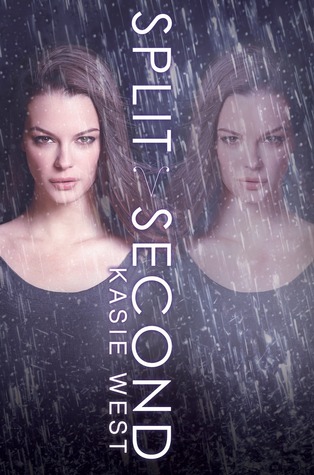
Review - Split Second by Kasie West


Split Second (Pivot Point, #2)
Split Second by Kasie West
Series: Pivot Point #2
Published by HarperTeen on Feb 11 2014
Genres: Young Adult, Paranormal
Pages: 360
Rating: 3.5/5 stars

Life can change in a split second.
Addie hardly recognizes her life since her parents divorced. Her boyfriend used her. Her best friend betrayed her. She can’t believe this is the future she chose. On top of that, her ability is acting up. She’s always been able to Search the future when presented with a choice. Now she can manipulate and slow down time, too . . . but not without a price. 
When Addie’s dad invites her to spend her winter break with him, she jumps at the chance to escape into the Norm world of Dallas, Texas. There she meets the handsome and achingly familiar Trevor. He’s a virtual stranger to her, so why does her heart do a funny flip every time she sees him? But after witnessing secrets that were supposed to stay hidden, Trevor quickly seems more suspicious of Addie than interested in her. And she has an inexplicable desire to change that. 
Meanwhile, her best friend, Laila, has a secret of her own: she can restore Addie’s memories . . . once she learns how. But there are powerful people who don’t want to see this happen. Desperate, Laila tries to manipulate Connor, a brooding bad boy from school—but he seems to be the only boy in the Compound immune to her charms. And the only one who can help her. 
As Addie and Laila frantically attempt to retrieve the lost memories, Addie must piece together a world she thought she knew before she loses the love she nearly forgot . . . and a future that could change everything.
Split Second, the second and final book in the Pivot Point duology, was a thoroughly pleasant read. I have very few complaints about this series as a whole. Though it was enjoyable and quick and the writing was excellent, I just don’t feel like this series is as memorable as it should be. I wanted to love it so much more than I actually did. I greatly enjoyed the process of reading it, but looking back upon Split Second, it just didn’t quite cut it for me.

My favourite thing about Split Second was West’s decision to switch the narration back and forth between best friends Addie and Laila. I love love loved the addition of Laila’s viewpoint, and it really made the book so much richer. Not to mention that her love interest is a total babe. I thought that I was fond of Addie’s love interest in Pivot Point (Trevor), but Connor totally gave him a run for his money. I was a little bit wary of Laila’s point of view to begin with, as I worried that it might be a snorefest and I’d spend every second of Laila’s chapters wanting to get back to Addie and Trevor. Surprisingly, I found the opposite occurred! I just couldn’t get behind the idea of Addie having all of her old memories of Trevor while he had none of her – their relationship just seemed very lopsided to me in this book. It just didn’t meet up to the magic of their beautiful romance in Pivot Point. Laila and Connor, on the other hand? They were everything I wanted and more. Laila is so much more complicated and layered than she appears in Pivot Point, and I loved watching her let down her guard and slowly let Connor into her life, and vice versa. My one complaint about their relationship is how quickly they shift from complete denial of the chemistry and feelings between them to being one of those gross couples that are always all over each other. Not that they’re gross! They totally aren’t!

There were also some more minor details that I found particularly special. I loved seeing the way that Addie and Stephanie’s relationship was completely changed simply by how they first met. In Split Second, Addie is introduced to Steph at one of their fathers’ work functions, and Steph becomes her first friend in Dallas. This is so insanely different from the side of Steph we see in Pivot Point; the girl who is in turns jealous and manipulative and cruel to Addie. I also enjoyed seeing more of Laila’s siblings. I was slightly annoyed at how little her parents played into her storyline, especially considering how damaging her relationships with her mother and her father were, but I was pleased with the inclusion of her brothers (one more than the other). Despite making mistakes, it’s clear that Laila loves her brothers and wants to protect them. Their parents certainly don’t do a good job of it.


I did find the plot kind of contrived, and though it was fast-paced and action-packed, I just didn’t really like it. The premise of their world, yes. The actuality of the Compound officials going around and brainwashing people willy-nilly, not so much. It was just a bit too dramatic for my tastes. That said, I thought that it was a lovely conclusion to a lovely series. I really do love Kasie West’s writing, and I’m eager to pick up her contemporary novels in the (near-ish?) future.