Showing posts with label fantasy. Show all posts

Wednesday, 15 October 2014

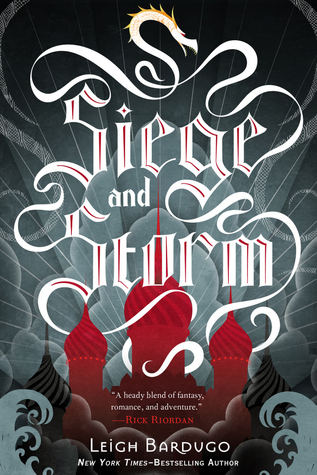
Review - Siege and Storm - Leigh Bardugo


Siege and Storm (The Grisha, #2)

Siege and Storm by Leigh Bardugo
Series: The Grisha #2
Published by Henry Holt and Co. on June 4 2013
Genres: Fantasy, Young Adult
Pages: 432
Rating: 2/5 stars
Darkness never dies. 
Hunted across the True Sea, haunted by the lives she took on the Fold, Alina must try to make a life with Mal in an unfamiliar land. She finds starting new is not easy while keeping her identity as the Sun Summoner a secret. She can’t outrun her past or her destiny for long. 
The Darkling has emerged from the Shadow Fold with a terrifying new power and a dangerous plan that will test the very boundaries of the natural world. With the help of a notorious privateer, Alina returns to the country she abandoned, determined to fight the forces gathering against Ravka. But as her power grows, Alina slips deeper into the Darkling’s game of forbidden magic, and farther away from Mal. Somehow, she will have to choose between her country, her power, and the love she always thought would guide her--or risk losing everything to the oncoming storm.
I don’t know why I decided to read this book. Well, I do, but I probably shouldn’t have. I knew going into it that the likelihood of it impressing me was miniscule. But when I saw it sitting pretty on the shelf at the library, I just couldn’t resist grabbing it and Ruin and Rising. I really regret that spur of the moment decision.

The pacing in Siege and Storm is wildly inconsistent. The first two or three chapters move at a break-neck speed (I almost felt like I was getting story whiplash it was going so quickly) and then about a third of the way through the book it takes a serious nosedive into epic slowness. The scenes on the Hummingbird just didn’t work for me. I think what got me about this section of the book is that there is just so much monotonous travelling going on. There just wasn’t much to keep my interest. The pace picked up again toward the end of the book with a very sudden and abrupt battle that I was about as prepared for as Alina and company were. The last quarter of the book was SO DISAPPOINTING to me. It got my hopes up that a certain twist was in store and that I’d get to see more of the Alina I actually find interesting, but alas, it was not to be. Siege and Storm was, in so many ways, a series of let downs.

The biggest qualm I have with this book is the characters. As you may know, I am very much a character reader. I don’t have to necessarily like a character, but if I don’t feel any connection to the characters there is zero chance I will enjoy the book. This is one of those books where I just can’t get on the same emotional level as any of the characters. Alina has moments when I think she’s totally awesome, but then she lets her guilt take over and gets very self-sanctimonious and I just have no patience for that. Mal is a complete write-off as a character. He’s so freaking boring. I’m two books in and literally the only thing I know about Mal is that he’s a good tracker. Not because he works really hard at it, he just is. Also, he’s really attractive and all of the ladies fawn over him. Lame. I have never seen any chemistry between Alina and Mal, especially compared to the chemistry she has with both the Darkling and Nicolai/Sturmhond. Sure, the chemistry she shares with them are very different, but at least there’s something. I can honestly say that I prefer the side of Alina we see when she’s around the Darkling to when she’s with Mal. When Alina is around Mal she becomes an insecure mess. The Darkling makes her feel powerful. Be honest, which would you prefer?

I was quite happy to meet Sturmhond in Siege and Storm. He’s definitely my favourite of the three main men in Alina’s life. What can I say, I’m a sucker for a charmer. He also seems a bit more complex than Mal and the Darkling. Where there is a clear indication of good versus evil when it comes to Mal and the Darkling, Sturmhond occupies the grey space in between and I’m into that.

One other niggling thing that I noticed while reading Siege and Storm is the way that Alina perceives other women. It is so unhealthy and there is a vast amount of internalised misogyny clouding her judgement. It’s particularly evident in the way that she interacts with Zoya. Every time Zoya is mentioned, some aspect of her appearance is noted. She is constantly described as beautiful and threatening, and I find it rather disconcerting. The only character who isn’t looked down upon for her beauty is Genya, and we all know what happens to her by the end of the book. It just struck me as odd that all of the men in the book are praised for being good looking, yet Alina is constantly comparing herself to other women and simultaneously putting down herself for not being pretty enough and them for being too pretty.


Because I’m already two thirds of the way through the series, I’ve decided to read Ruin and Rising, just to see how everything turns out. I figure I’ve already invested so much time and energy into this trilogy that I might as well see it through to the bitter end. I’ve read about 20 pages and so far I’m even less impressed with book 3 than I was with book 2. How promising… Hopefully things will turn around enough in the next 400 pages to make me not regret ever bothering with this series. If not, I probably won’t be reading whatever Leigh Bardugo comes up with next. It’s not you, Leigh. It’s me.

Monday, 6 October 2014

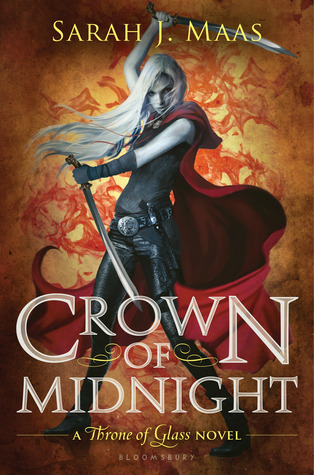
Review - Crown of Midnight by Sarah J. Maas


Crown of Midnight (Throne of Glass, #2)

Crown of Midnight by Sarah J. Maas
Series: Throne of Glass #2
Published by Bloomsbury on August 27 2013
Genres: fantasy, young adult
Pages: 420
Rating: 4/5 stars
From the throne of glass rules a king with a fist of iron and a soul as black as pitch. Assassin Celaena Sardothien won a brutal contest to become his Champion. Yet Celaena is far from loyal to the crown. She hides her secret vigilantly; she knows that the man she serves is bent on evil. 
Keeping up the deadly charade becomes increasingly difficult when Celaena realizes she is not the only one seeking justice. As she tries to untangle the mysteries buried deep within the glass castle, her closest relationships suffer. It seems no one is above questioning her allegiances—not the Crown Prince Dorian; not Chaol, the Captain of the Guard; not even her best friend, Nehemia, a foreign princess with a rebel heart. 
Then one terrible night, the secrets they have all been keeping lead to an unspeakable tragedy. As Celaena's world shatters, she will be forced to give up the very thing most precious to her and decide once and for all where her true loyalties lie...and whom she is ultimately willing to fight for.
Crown of Midnight excelled in almost all of the places where Throne of Glass failed, and it definitely earned the extra star. I’m so glad to have been able to read Throne of Glass and Crown of Midnight back to back, because if I hadn’t had Crown of Midnight on hand right after finishing Throne of Glass, I may never have bothered to read it. That said, it was so worth reading.

As you probably know, I’m a busy university student. I’m doing a double major in English and Women’s Studies, and I started this book right around the time that the fall semester (AKA the beginning of my fourth year of university) began. Let me tell you, I have had zero time for reading thus far this semester. I have managed to read all of three books in the three weeks. Over the summer, I read an average of about 2.5 books per week. Clearly, that has slowed down. The point that I’m getting at here is that amidst all of the craziness of getting back into the swing of studying nonstop, I managed to read this book in less than four days. I know that may not sound like much, but that’s a big deal right now.

This book definitely raised the stakes from Throne of Glass. It was on a higher level on both a political plane and an emotional one. I’m not ashamed to admit that it made me shed a tear or two. I got a little weepy. The character development shown in Crown of Midnight surpasses anything I could ever wish for. Celaena grows tremendously over the course of the book, and you can see her thought processes changing and she slowly learns to listen to and trust the people she cares about.


I’m going to keep this review short because I simply don’t know how to gush over this book without releasing all of the spoilers, but I am really impressed with Maas’s progression as a writer and as a storyteller. Where Throne of Glass often lacked a certain finesse, Crown of Midnight was practically flawless in execution. It flowed wonderfully, the pacing consistent and quick-moving, and the slow unraveling of the mysteries was tantalizing in a way that was completely unmatched by the smaller scale mysteries of the first book. I’m so excited to see where this story will go in Heir of Fire (which I need to get my hands on NOW). I’d also really like to read The Assassin’s Blade, though I’m typically not a fan of prequels or add-in short stories/novellas. I’ve heard great things about these ones, and I might just order the whole series (to date) on my next pay day.

Friday, 3 October 2014

Review - Throne of Glass by Sarah J. Maas


Throne of Glass (Throne of Glass, #1)

Throne of Glass by Sarah J. Maas
Series: Throne of Glass #1
Published by Bloomsbury on August 7 2012
Genres: fantasy, young adult
Pages: 404
Rating: 3/5 stars
After serving out a year of hard labor in the salt mines of Endovier for her crimes, 18-year-old assassin Celaena Sardothien is dragged before the Crown Prince. Prince Dorian offers her her freedom on one condition: she must act as his champion in a competition to find a new royal assassin. Her opponents are men-thieves and assassins and warriors from across the empire, each sponsored by a member of the king's council. If she beats her opponents in a series of eliminations, she'll serve the kingdom for three years and then be granted her freedom.  
Celaena finds her training sessions with the captain of the guard, Westfall, challenging and exhilirating. But she's bored stiff by court life. Things get a little more interesting when the prince starts to show interest in her... but it's the gruff Captain Westfall who seems to understand her best.  
Then one of the other contestants turns up dead... quickly followed by another. 
Can Celaena figure out who the killer is before she becomes a victim? As the young assassin investigates, her search leads her to discover a greater destiny than she could possibly have imagined.
I’ve been hearing about the Throne of Glass series all over the blogosphere for as long as I can remember (basically since 2012, when it was published), but I never got into it. Why, I have no idea, considering it is full of things I love, namely badass assassins and political fantasy. Yes please. However, I have had to take this book out of the library on three separate occasions before I was finally able to get past the first fifty pages. I just wasn’t feeling it.

I think that this book suffers from a rather weak opening, but it definitely builds as the book progresses. I grew to really like Celaena – it’s a nice change to see a YA protagonist who isn’t self-deprecating and is fully aware of how amazing she is. Celaena has her flaws, but that’s what makes her so dynamic and interesting to read about. I was also a humungous fan of the fledgling friendship between Celaena and Nehemia. I think that friendship between girls in YA is incredibly important and it was so refreshing to see that come about on the pages of Throne of Glass. Honestly, I’m quite enamoured with Nehemia all on her own; she’s a seriously ballsy lady.

There is what might be considered a love triangle in this book, which I wasn’t particularly pleased with. There’s some killer romantic/sexual tension between Celaena and the captain of the guard, Chaol, but there is also a weird romance between Celaena and the crown prince, Dorian, which I was less fond of. I do like the way that Celaena and Dorian’s relationship grew and changed over the course of the book, and I’m quite happy with where they left off at the end.

The one thing I found rather lacking in Throne of Glass was the action. It simply wasn’t as action-packed as I was expecting. There was a lot of reading and walking and running, but only a few real high stakes scenes stick out to me. I found that Celaena, for all her confidence regarding her abilities as an assassin, didn’t really do anything to live up to her reputation. She wasn’t as impressive as I wanted her to be. I also thought that the mystery wasn't as breath-taking and suspenseful as it should have been. I never worried for the safety of any of the main characters, nor was I particularly panicked to find out the identity of the murderer.


On the whole, Throne of Glass wasn’t a bad book, and it definitely had its interesting moments, but it wasn’t up to the standard I hold for fantasy books (by which I mean it wasn’t Froi of the Exiles calibre excellence). It was a decent introduction to the series, but I definitely think that things will improve as the tale progresses. The way that the first chapter or two were the shaky beginnings to this novel, I believe Throne of Glass stands as the shaky beginning to what will amount to an overall solid series.

Friday, 19 September 2014

Review - The Queen of the Tearling by Erika Johansen


The Queen of the Tearling (The Queen of the Tearling, #1)
The Queen of the Tearling by Erika Johansen
Series: The Queen of the Tearling #1
Published by Harper on July 8 2014
Genres: Dystopian, Fantasy, Young Adult
Pages: 448
Rating: 2.5/5 stars
On her nineteenth birthday, Princess Kelsea Raleigh Glynn, raised in exile, sets out on a perilous journey back to the castle of her birth to ascend her rightful throne. Plain and serious, a girl who loves books and learning, Kelsea bears little resemblance to her mother, the vain and frivolous Queen Elyssa. But though she may be inexperienced and sheltered, Kelsea is not defenseless: Around her neck hangs the Tearling sapphire, a jewel of immense magical power; and accompanying her is the Queen’s Guard, a cadre of brave knights led by the enigmatic and dedicated Lazarus. Kelsea will need them all to survive a cabal of enemies who will use every weapon—from crimson-caped assassins to the darkest blood magic—to prevent her from wearing the crown. 
Despite her royal blood, Kelsea feels like nothing so much as an insecure girl, a child called upon to lead a people and a kingdom about which she knows almost nothing. But what she discovers in the capital will change everything, confronting her with horrors she never imagined. An act of singular daring will throw Kelsea’s kingdom into tumult, unleashing the vengeance of the tyrannical ruler of neighboring Mortmesne: the Red Queen, a sorceress possessed of the darkest magic. Now Kelsea will begin to discover whom among the servants, aristocracy, and her own guard she can trust.
I’m glad to say that I didn’t hate this book as much as most of my fellow bloggers seem to, but it definitely wasn’t what it was pitched to be. I was lucky enough to know going into it that it wasn’t a straight-up fantasy, but a strange dystopian fantasy hybrid in which an event called The Crossing occurred, during which most modern “luxuries” a la medicine and electricity were lost. Now, what exactly the Crossing was is never explained in the nearly 500 pages of this book. I imagine it may be explained in subsequent books, but it was kind of a mind fuck.

There is some serious logic fail going on in this book. There is talk of other nations being capable of plastic surgery yet the Tearling doesn’t even have the most basic medicine. They don’t even have printing presses. It’s your basic quasi-medieval fantasy setting with a big ol’ FUCK YOU twist thrown in for good measure. And it doesn’t really work. The Queen of the Tearling would have been a thousand times more enjoyable if it wasn’t such a weird setting.
 kidding me
The characters leave a lot to be desired as well. Kelsea, the main character and incumbent Queen of the Tearling, is rash and impulsive. She doesn’t think things through, which is a terrible trait in a Queen. She talks about wanting to do the best for her kingdom, yet she doesn’t actually consider the consequences of her actions. For instance, when she learns about the crown-condoned slave trade between the Tearling and neighbouring kingdom Mortmesne, she immediately releases all of the prisoners, hires a bunch of them on as her personal staff, and burns the cages used to transport them. She doesn’t care that the Queen of Mortmesne is infinitely more powerful than she is and that she will be slightly insulted to discover her shipment of slaves has not been delivered. I agree that something had to be done to put a stop to the agreement between the Tearling and Mortmesne, but Kelsea’s solution was far from intelligent.

She is also very judgemental. She believes herself to be plain and unattractive (based on a glimpse of herself in a puddle when she was about fifteen) and is very insecure because of it. She takes extensive note of the appearances of everyone she meets and compares herself to them endlessly. There is one particularly offensive scene in which Kelsea mentally chastises an aging woman for believing herself to be beautiful. How dare this lady who is in her fifties or sixties feel confident in her own appearance??!! Kelsea also spends a lot of time thinking about how men don’t find her attractive, especially one outlaw she encounters twice. She is really hung up on this guy and how he once said that she wasn’t his type. I was glad to find that he only makes two appearances, as I really did appreciate how little romance came into play in this book. I can only imagine it will become a more central focus as the series progresses, because that’s usually how these things go.

Also, everyone in this book is completely incompetent when it comes to their jobs. Kelsea is a horrible queen, her head guard allows her to be stabbed in the back, an assassin manages to catch her unattended in the bath. It’s just a major clusterfuck and everyone deserves to be fired. There is also the issue of the climactic scene being resolved by Kelsea’s magical necklaces. I really don’t like when objects are the solutions to problems. It’s just too convenient. I’d much rather have the characters use their actual brains – they have them for a reason!

My final note is that I really wish this book had better representation of women. There are a handful of women gracing the pages, but they’re almost all disappointing. First there is Carlin, Kelsea’s cold and aloof guardian with whom Kelsea had a very strained relationship because Carlin didn’t feel like she could allow herself to show Kelsea love. WHAT THE FUCK KIND OF LOGIC??? Then there’s the evil queen of Mortmesne, known only as The Red Queen. She’s a stereotype if I’ve ever seen one – leaning heavily on magic and fear to control her kingdom, she is the epitome of the evil seductress. The most interesting female character is a beautiful young woman formerly “owned” by Kelsea’s gross uncle. Unfortunately she doesn’t play a very big role in the novel. I suppose I just wish Kelsea had a friend or a counsel or someone to bounce ideas off of aside from Mace. Whose job is to protect her, not to help her make political decisions.  
 disappointed

It may seem like I hated this book, but I didn’t. I liked the writing and I am interested to see what Johansen does with the strange combination of story elements she’s pulled together. It may have had it’s seriously dumb moments, but The Queen of the Tearling wasn’t all bad.

Monday, 1 September 2014

Review - The Girl Who Fell Beneath Fairyland and Led the Revels There by Catherynne M. Valente


The Girl Who Fell Beneath Fairyland and Led the Revels There (Fairyland, #2)

Series: Fairyland #2
Published by Feiwel & Friends on Oct 2 2012
Genres: Fantasy, Middle Grade
Pages: 258
Rating: 5/5 stars
September has longed to return to Fairyland after her first adventure there. And when she finally does, she learns that its inhabitants have been losing their shadows—and their magic—to the world of Fairyland Below. This underworld has a new ruler: Halloween, the Hollow Queen, who is September’s shadow. And Halloween does not want to give Fairyland’s shadows back. 
Fans of Valente’s bestselling, first Fairyland book will revel in the lush setting, characters, and language of September’s journey, all brought to life by fine artist Ana Juan. Readers will also welcome back good friends Ell, the Wyverary, and the boy Saturday. But in Fairyland Below, even the best of friends aren’t always what they seem. . . 
I never for a second doubted that I would love The Girl Who Fell Beneath Fairyland…. There wasn’t a thing not to love. After the phenomenal first book in the series, I was thoroughly hooked. In fact, I even managed to read the second book within a year of reading the first, which is quite a feat for me!

The Girl Who Fell Beneath Fairyland and Led the Revels There takes place a year after September returns to her home in Omaha, Nebraska. She itches to return to Fairyland, and searches for the Green Wind and opportunities to go back anywhere she can. She finally returns to Fairyland on her thirteenth birthday whilst attempting to read French books in a corn field. September arrives in Fairyland hoping to find adventure and excitement, though she doesn’t anticipate how needed she is. She is quickly thrust into the current upheaval faced by the residents of Fairyland – they are losing their shadows, and with their shadows their magic. September discovers that her own shadow, which she bargained away during her first visit to Fairyland, is the force behind the mass shadow exodus and takes it upon herself to stop Halloween (as September’s shadow has dubbed herself).

Like the first book in the series, this novel was incredibly creative. I envy Valente her ginormous imagination, but I’m so grateful to be able to read about all of these fantastical characters and events even if I am incapable of creating anything quite so magical myself. I was particularly enamoured with the tea and coffee family (whose names I unfortunately cannot remember!) and Aubergine the Night Dodo, who was absolutely lovely, though I’ll admit that every single character in this series is utterly unforgettable.

I was also impressed with the integration of September’s personal growth. She’s truly growing up, and you can see her maturing right before your eyes. Where she was a heartless child in The Girl Who Circumnavigated Fairyland… she has begun to develop a heart and a conscious. She is no longer a child and it is evident in the choices she makes as well as the way that she is dealt with in the narration. There is a more melancholy streak in this book that in the first, and I think that is due to the fact that September is indeed becoming a teenager and is able to see the darkness through all of the beauty and brilliance of Fairyland. The inclusion of her father at the end of the book ripped my heart right out of my chest.

The sporatic illustrations throughout the book were beautiful and imaginative. I loved the way that the illustrator played with proportions and didn’t necessarily create images that directly translated exactly what was written. It really added to the reading experience.


My one source of confusion or annoyance in The Girl Who Fell Beneath Fairyland… was that September’s shadow had her own name and her own identity, yet all of the other shadows went by their person’s name. For instance, Saturday’s shadow was called Saturday. I understood why this made sense for narrative purposes, as it illustrated the fact that they were two sides of the same person, but I thought it rather odd that Halloween was the one exception. Other than that, I was completely enraptured by this book and would recommend it to anyone regardless of age or gender or anything else. It’s the kind of book that makes me really appreciate what middle grade books have to offer and why they are so important. 

Monday, 4 August 2014

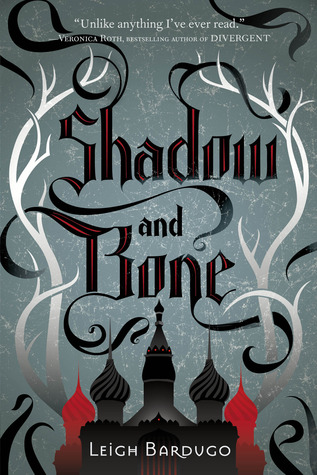
Review - Shadow & Bone by Leigh Bardugo


Shadow and Bone (The Grisha, #1)
Shadow & Bone by Leigh Bardugo
Series: The Grisha #1
Published by Henry Holt & Co on June 5 2012
Genres: Young Adult, Fantasy
Pages: 358
Rating: 2.5/5 stars
The Shadow Fold, a swathe of impenetrable darkness, crawling with monsters that feast on human flesh, is slowly destroying the once-great nation of Ravka. 
Alina, a pale, lonely orphan, discovers a unique power that thrusts her into the lavish world of the kingdom’s magical elite—the Grisha. Could she be the key to unravelling the dark fabric of the Shadow Fold and setting Ravka free? 
The Darkling, a creature of seductive charm and terrifying power, leader of the Grisha. If Alina is to fulfill her destiny, she must discover how to unlock her gift and face up to her dangerous attraction to him. 
But what of Mal, Alina’s childhood best friend? As Alina contemplates her dazzling new future, why can’t she ever quite forget him? 
And the hype machine strikes again. For a book that has received as much hype over the past two years as Shadow & Bone, I really expected something much more impressive. I’m not sure why I even bothered, as it appears that the blog hype machine is built to fail, at least for me. The only book I’ve read based on the hype surrounding it that I actually liked was Daughter of Smoke & Bone. This was no Daughter of Smoke & Bone, people.

Let’s start things off by quickly discussing the immensely irritating use of Russian culture in the worldbuilding of Shadow & Bone. It’s clear that Bardugo set out to write a fantasy novel set in a less expected locale – rather than writing about a pseudo-Europe, she chose to create an alternate universe Russia. This would have been great, if it had worked. The problem was that it was completely half-assed. The first clue that this book would piss me off was the disregard for Russian naming practices – namely the misuse of surnames throughout the book. It’s pretty common knowledge that in Russia, 'ov' surnames are masculine and 'ova' is the feminine variation. So it was rather frustrating to continually read about a main character called Alina Starkov, knowing that her name should in fact be Alina Starkova. There is also an instance in which a female character is given the male first name Ilya. And then there’s the fact that the book is chalk full of Russian stereotypes – bear rugs and squirrel hats and constant imbibing (on a drink called kvas, which is in fact a non-alcoholic beverage. Why not just call it something else??). I was also perturbed by the mixed use of real Russian words and made-up Russian-sounding words, not to mention the use of Russian words to mean completely different things. I have read some of Bardugo's defence of her decisions, in which she claims that these were conscious decisions that she made for the book, but I honestly don't think that excuses them. You can't just hide behind artistic license when it comes to things like this. There are few things that irritate me more than disrespecting other cultures, and this book does just that at every turn. I can’t imagine how I might react to it if it was my culture that was being butchered, but I can’t imagine I’d be impressed with Bardugo’s hack job.

The characters and plot were also quite lackluster. They were very reminiscent of things I’ve read a million times before – stock figures more than real individuals. This story is told in first person POV, yet I never really felt like I knew who Alina was at her core. She was constantly being manipulated and she completely lacked a backbone throughout the story. I’m getting pretty sick of the whole “chosen one” plotline, and Shadow & Bone is a good example of why. Alina discovers that she’s a Sun Summoner – the ONLY Sun Summoner – and then she does absolutely fuck all with her newfound powers. She doesn’t even try. She just sits around twiddling her thumbs and doing what people tell her to. What a waste. I was also really annoyed by the fact that the throughout the first half (or so) of the book, such a big deal is made of the fact that Alina isn't pretty - she's described as sickly looking, too thin and pale and sleep-deprived. Of course, as soon as she learns to accept & use her magic, she becomes beautiful. Because god forbid we have a main character who is anything but perfect.

I think that it would have made for a much stronger (or at least more memorable!) story if Alina had consciously decided to side with the Darkling. Not to be his slave, but to be his partner. I would have been interested in reading that book. It was impossible for me to connect with her, nor did I think that any of the other characters were any better. The only character I was somewhat interested in was Alina’s friend Genya, whose story I found quite fascinating, though we weren’t privy to many of the details of her life. 

I was unimpressed with the Darkling both as a villain and as a love interest. He was neither scary nor sexy, not to mention the fact that the dude is 120 years old. Ew. I didn’t particularly like Mal either, though. He was very hot and cold – one minute he was furious with Alina, the next distant and cold, the next thing I know he’s professing his undying love for her and willing to die to save her. Double ew. 

The plot was simply pedestrian. It was a traditional been-there-done-that light fantasy wrapped up in a bad Russian disguise. It lacked depth, and nothing shocking (or even really interesting) happened. It felt like it was just going through the motions of Typical Fantasy Novel – orphaned teenager, catching up at weird pseudo-boarding school, traveling by foot for a very long time and not getting enough to eat, big climactic moment, the end. Now, I don’t usually mind this – I’ve loved a lot of books that contain most of these elements – but there was just something forgettable about Shadow & Bone.

The one thing I enjoyed about Shadow & Bone was the writing. It was well paced and moved quickly and steadily (though that ending was just stupid). Bardugo’s use of words was simple but effective, and despite all of the frustrations I had with it, I couldn’t seem to put the book down. I’m even contemplating requesting the second book from the library, though I truly don’t know why.

It did have a very pretty map though. I like maps. It gets half a star for the map.

Wednesday, 23 July 2014

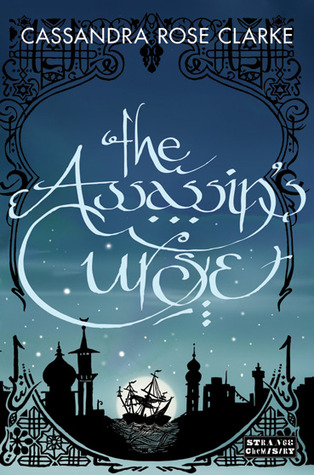
Review - The Assassin's Curse by Cassandra Rose Clarke


The Assassin's Curse (The Assassin's Curse, #1)

The Assassin’s Curse by Cassandra Rose Clarke
Series: The Assassin’s Curse #1
Published by Strange Chemistry on October 2 2012
Genres: Young Adult, Fantasy

Pages: 298
Rating: 3/5 stars
Ananna of the Tanarau abandons ship when her parents try to marry her off to another pirate clan. But that only prompts the scorned clan to send an assassin after her. When Ananna faces him down one night, armed with magic she doesn't really know how to use, she accidentally activates a curse binding them together. 
To break the spell, Ananna and the assassin must complete three impossible tasks--all while grappling with evil wizards, floating islands, haughty manticores, runaway nobility, strange magic...and the growing romantic tension between them. 
For a book about pirates and assassins, The Assassin’s Curse was rather dull. The best part of the book is honestly the cover – it’s a very nice cover. Unfortunately, it just didn’t live up to the expectations I had for it. It wasn’t a horrible book, but it wasn’t great either. Perhaps my expectations were high, but I think that they should be. I go into every book with the hopes that it will wow me and leave me yearning for more, but this just didn’t do it.

The characters weren’t bad – kind of predictable YA fantasy tropes, but nothing glaringly offensive. I would have liked to see a more interesting reason for Ananna to run away from her responsibilities. Her reasoning seemed both immature and over-used. Running away from an unwanted marriage is a very familiar scenario, and I don’t think that The Assassin’s Curse offered an interesting spin on it in any way. She was rather naïve for a girl who was raised by pirates, and she lacked the fieriness I expected of her. Naji was slightly more interesting, but he was kind of an asshole most of the time.

I thought it was really refreshing that Ananna and Naji weren’t beautiful people. They weren’t physically spectacular, which is so uncommon in YA. It seems like everyone in YA is a super model, and it gets old. So I was pleasantly surprised to learn that Ananna was of a heavier/thicker build than the average YA heroine, and that Naji was insecure about the scars on his face (going so far as to hide behind a desert mask, which was pretty cute for such a tough guy).

I did enjoy the setting – you don’t see a lot of fantasy set in Middle Eastern-esque places. I appreciated the way that the setting changed as the book progressed – it never felt stagnant. I also kind of liked the pacing of the romance – there were no declarations of undying love two days after first meeting one another, hurrah! It isn’t until the last few pages of the book that Ananna even recognizes that her feelings for Naji have turned romantic, which was so nice. I can see other readers not being so keen on the slow burn, but that’s the kind of romance I prefer. The only problem I have with the romance is that it just kind of… popped up at the end of the book. There wasn’t really much build up – to friendship, yes, but not to romance.

The ending of this book was really disappointing. It ended very abruptly, with no real climax or resolution. It just… ended. I think it would have made a lot more sense, considering that it’s a two-book series, for the publisher’s to package it as a solitary book. It wasn’t like The Assassin’s Curse was particularly long to begin with, so it could have worked. It would definitely have been more satisfying, considering I don’t feel like I got any kind of closure at the end of this book.

This book was fun, but it wasn’t particularly memorable, nor did it meet the hopes I had for it. I may or may not read the sequel, but I found the poor pacing and stereotypical characters trying. It was a quick read, but it didn’t grab my heart. I have no emotional attachment to Ananna and Naji whatsoever, and that’s a big disappointment. I simply don’t much care what happens to them.

Monday, 2 June 2014

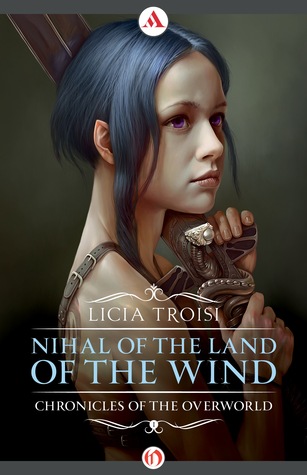
ARC Review - Nihal of the Land of the Wind by Licia Troisi


Nihal of the Land of the Wind

Nihal of the Land of the Wind by Licia Troisi

Series: Chronicles of the Overworld #1
Published by OpenRoad Media on May 27 2014
Genres: Young Adult, Fantasy
Pages: 230
Rating: 2.5/5 stars
An international bestseller from an extraordinary storyteller—get ready for Nihal and her world. 
Nihal lives in one of the many towers of the Land of the Wind. There is nobody like her in the Overworld: big violet eyes, pointed ears, and blue hair. She is an expert in swordplay and the leader of a handful of friends that includes Sennar the wizard. She has no parents; brought up by an armorer and a sorceress, Nihal seems to be from nowhere. 
Things suddenly change when the Tyrant takes charge. Nihal finds herself forced to take action when she is faced with the most difficult mission a girl her age could imagine. 
Fierce, strong, and armed with her black crystal sword, Nihal sets out to become a real warrior. Readers will be riveted as she forges her powerful path of resistance.
I received this book for free from the Publisher in exchange for an honest review. This does not affect my opinion of the book or the content of my review.
Translated into English from Italian, Licia Troisi’s debut novel gets off to a grand start. The beginning of Nihal of the Land of the Wind isn’t particularly original, but it is immersive and does an excellent job of introducing the reader to both the extensive setting and many of the important characters. It isn’t until the second half of the novel that everything starts to fall apart.

As a child, Nihal is intrinsically likeable. The daughter of a renowned blacksmith, Nihal’s favourite hobby is playing at war with the other neighbourhood children (all boys, because apparently no other girls want to engage in pretend battles). She is free spirited and independent and tenacious. When she is bested in combat by a sorcerer (she forgot to stipulate that there be no magic in their fight), Nihal decides to learn magic in order to be the best warrior she can be. However, this is where Nihal’s likeable/sympathetic traits end. I spend most of the novel irritated by Nihal’s behaviour. She grows from a tenacious child to a ruthless and narrow-minded young woman, throwing her all into killing. Despite what the book seems to suggest, I never really felt like Nihal learned that her attitude towards war was a detriment to herself and everyone around her. She was incapable of helping anyone but herself, and it was dangerous.

The only character I really liked or sympathized with was Sennar, and even he was particularly memorable. I found his crush on Nihal very frustrating because I was so hoping to see a book in which a young girl and a young boy can be friends without developing romantic feelings for one another. On a similar note, I wish that Nihal hadn’t had a crush on Fen. It would have been much more interesting for her to simply admire him and aspire to be like him without that element.

The plot was quite predictable. I found it to have echoes of Tamora Pierce and Mercedes Lackey’s popular ‘80s series, but it didn’t live up to the high bar that those two incredible women set. The writing, while not distractingly bad, wasn’t particularly interesting or notable in any way. The world building, on the other hand, was quite impressive. It was particularly well-integrated for the first book in a series. It was very vivid and for the most part was well thought out.

I don’t think that I’d actively recommend this as do think that the negatives outweigh the positives, but it depends on what the reader is looking for in the book. Unfortunately, I simply didn’t find it particularly memorable or original.

Monday, 12 May 2014

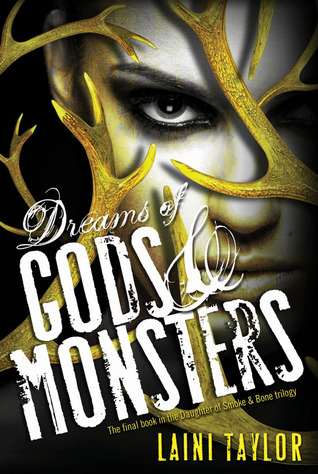
Review - Dreams of Gods and Monsters by Laini Taylor


Dreams of Gods & Monsters (Daughter of Smoke & Bone, #3)

Dreams of Gods and Monsters by Laini Taylor
Series: Daughter of Smoke & Bone #3
Published by Little, Brown & Company on April 8 2014
Genres: Young Adult, Paranormal, Fantasy
Pages: 613
Rating: 5/5 stars

By way of a staggering deception, Karou has taken control of the chimaera rebellion and is intent on steering its course away from dead-end vengeance. The future rests on her, if there can even be a future for the chimaera in war-ravaged Eretz.
Common enemy, common cause. 
When Jael's brutal seraph army trespasses into the human world, the unthinkable becomes essential, and Karou and Akiva must ally their enemy armies against the threat. It is a twisted version of their long-ago dream, and they begin to hope that it might forge a way forward for their people. 
And, perhaps, for themselves. Toward a new way of living, and maybe even love.
But there are bigger threats than Jael in the offing. A vicious queen is hunting Akiva, and, in the skies of Eretz ... something is happening. Massive stains are spreading like bruises from horizon to horizon; the great winged stormhunters are gathering as if summoned, ceaselessly circling, and a deep sense of wrong pervades the world.
 
What power can bruise the sky? 
From the streets of Rome to the caves of the Kirin and beyond, humans, chimaera and seraphim will fight, strive, love, and die in an epic theater that transcends good and evil, right and wrong, friend and enemy.  
At the very barriers of space and time, what do gods and monsters dream of? And does anything else matter?

The highlight of this book was not the main characters, lovely though they were. It was Liraz and Ziri. Before reading Dreams, I would never have believed that I’d love Liraz as much as I now do. I cried more times that I’d care to admit over Ziri’s fate (both good tears and bad tears). That moment with Liraz and Ziri at the entrance to the kirin caves? Hold me while I swoon! For all the focus that is given to the romance between Karou and Akiva, I was far less invested in their relationship than I was Ziri and Liraz’s.

Akiva has been my least favourite protagonist in this series since day one. I just don’t connect with him, and I don’t really see the attraction aside from the whole “soulmates” shtick. Not my jam. BUT Karou more than makes up for it. I love that girl so much and I’m really not even sure why. The blue hair doesn’t hurt.

The dudes in this series are way weaker than the ladies. I don’t mind it because they aren’t bad, but they aren’t as well rounded and interesting. It’s pretty obvious that Laini Taylor prefers writing women (I can’t blame her). Between Akiva and Mik, the main men don’t do much other than stand around being attractive and supportive and occasionally broody (we all know which one I’m talking about). The villains are pretty interesting, and very infuriating. I’m pretty sure I haven’t hated a character as much as Thiago since Voldemort.

A solid conclusion to a fascinating and staggeringly original story. I’ve never read a series quite like this. And I’ve read a lot. I wasn’t too sure about the introduction of a new problem in the last book of the series, but it definitely lends itself to a potential spin-off, which I approve of. I want to live in this world for as long as possible. The biggest major problem I had with the plot was that I wasn’t sure why the seraph had to leave Meliz in the first place. If the Stelians can keep the Beasts from entering Eretz, why wouldn’t they have been able to keep them out of Meliz? I get that this wouldn’t work for the plot, but it doesn’t quite add up.

I also got a kick out the scene with Karou and Akiva hiding in the hotel shower at the Kasbah. All I could think of was that Virko could hear every word they were saying and was standing there trying to ignore them.

Laini Taylor is a prose wizard. Everyone should aspire to be Laini Taylor. That is all. (Actually there were a couple of bits that were a little bit lengthier than necessary, but it didn’t bother me.)


Thursday, 19 September 2013

Review - The Iron King by Julie Kagawa


The Iron King (The Iron Fey, #1)

The Iron King by Julie Kagawa
Series: The Iron Fey #1
Published by Harlequin Teen on February 1 2010
Genres: Young Adult, Fantasy
Pages: 363
Rating: 3/5 stars

Meghan Chase has a secret destiny; one she could never have imagined.
Something has always felt slightly off in Meghan's life, ever since her father disappeared before her eyes when she was six. She has never quite fit in at school or at home. 
When a dark stranger begins watching her from afar, and her prankster best friend becomes strangely protective of her, Meghan senses that everything she's known is about to change. 
But she could never have guessed the truth - that she is the daughter of a mythical faery king and is a pawn in a deadly war. Now Meghan will learn just how far she'll go to save someone she cares about, to stop a mysterious evil, no faery creature dare face; and to find love with a young prince who might rather see her dead than let her touch his icy heart.

Meghan was very frustrating. She took a long time to clue into things and was very much a damsel throughout the novel. She was rescued over and over again and it got old quickly. Yes, she was in an unfamiliar, incredibly dangerous place, but she was far too reliant on everyone around her. She was also too trusting, especially in striking bargains all over the place like there were no consequences for her actions. I also found her interactions with Oberon and Titania very frustrating. She was so in denial that she acted like a petty child.

I thought that the romance came out of nowhere. I still have no idea what that was all about. I don’t get why Ash and Meghan even like each other, aside from the fact that she thinks that he’s pretty. I don’t see the attraction. I’ve already forgotten whatever sob story Kagawa gave Ash to explain away his tendency to be an asshole, so it clearly didn’t make much of an impression on me. He was exceedingly average, especially for a character with so much potential for greatness. I mean, he’s an Unseelie prince! He could be such a BAMF.


The plot… kind of sucked. Not only is Machina the dumbest villain name I’ve come across in a very long time, the whole concept of science as the enemy of magic was very contrived. I’ve read this exact plot over and over again. I liked the beginning of the book far more than the middle and end, which isn’t a good sign, in my opinion. Things became quite disjointed, particularly with the forced integration of Ash into the quest.

I like a good rescue mission as much as the next person, and I think that if there had been a better villain I would have liked this plot a lot more. I appreciated Meghan’s dedication to finding her little brother, though I did notice that the parallels with the movie Labyrinth were a tad on the overbearing side. I also really liked the references to A Midsummer Night’s Dream, one of my favourite Shakespeare comedies. I’ve always been a big fan of fairy folklore, but I was really looking for something new here. I didn’t find that Kagawa added anything to the genre that I’ve never read before, and neither the characters nor the writing made up for it.


The writing is quite juvenile, even for YA. It is evident that it is Kagawa’s first book, especially compared to her later Blood of Eden series. The language is simple, which I appreciate, though I could have used a bit more imagery (a request I never thought I’d make!). I liked some of the descriptions, particularly of the bramble in the Seelie court that changes shape based upon where one wants to go. Aside from that, the writing was pretty unimpressive.


A big fat MEH. I just don’t feel strongly either way about this book. It wasn’t horrible. The worldbuilding was interesting, though it could have been more thought out. It has a lot of potential and growing room for the rest of the series. The characters were frustrating, but not so much so that I couldn’t read past it. I didn’t like Meghan, but I didn’t hate her either. It’s really hard to say whether or not I’ll end up continuing the series. I won’t say that it won’t happen, but I’m not holding my breath until I pick up the next book either.

Friday, 6 September 2013

Review - Eon: Dragoneye Reborn by Alison Goodman


Eon: Dragoneye Reborn (Eon, #1)
Eon: Dragoneye Reborn by Alison Goodman
Series: Eon #1
Published by Viking Juveline on Dec 26 2008
Genres: Young Adult, Fantasy
Pages: 531
Rating: 4/5 stars

Swordplay, dragon magic--and a hero with a desperate secret
Twelve-year-old Eon has been in training for years. His intensive study of Dragon Magic,, based on East Asian astrology, involves two kinds of skills: sword-work and magical aptitude. He and his master hope that he will be chosen as a Dragoneye--an apprentice to one of the twelve energy dragons of good fortune.  
But Eon has a dangerous secret. He is actually Eona, a sixteen-year-old girl who has been masquerading as a boy for the chance to become a Dragoneye. Females are forbidden to use Dragon Magic; if anyone discovers she has been hiding in plain sight, her death is assured. 
When Eon's secret threatens to come to light, she and her allies are plunged into grave danger and a deadly struggle for the Imperial throne. Eon must find the strength and inner power to battle those who want to take her magic...and her life.


I’ve been humming and hawing over this review for weeks and I still don’t know what to write. I was really excited to read Eon when I drew it as my next book to read (I randomly select books so that I don’t have to choose!). I’d been meaning to read it for years and hadn’t gotten around to it yet and had seen that lots of my GR friends had given it really high ratings.


I loved the setting of Eon. Fantasy books in non-traditional fantasy settings (ie. Medieval England) are like crack to me. I can’t get enough of them. That said, I haven’t read many of them. The world-building and sheer research Alison Goodman put into Eon is phenomenal. I was so impressed with the detail of her creation, from the clothing to etiquette to food. Everything felt completely appropriate.

My favourite thing about Eon: Dragoneye Reborn is it’s complete lack of romantic plot! I love a good romance as much as the next girl, but I really wish YA would lay off on them a little bit. I don’t need romance in every single book that I read. Sometimes there really are more important things to worry about than a boy. That is particularly true when you have a conspiracy against your life. It also makes me feel slightly less pathetic about my perennial single-ness. Unfortunately, I’ve read some spoilers about Eona that say that this is, sadly, not the case in book 2. As much as I liked Eon, that actually made me far less inclined to pick up Eona.

By far my favourite character was Lady Dela. From the moment she was introduced she stole every scene she was in. I really appreciated how her gender was handled in the text (Lady Dela is a MTF trans lady). I was a little disappointed in the gender relations of the culture, as everyone (even Eona herself) is very misogynistic. I would really love to see a more liberated society in fantasy – it seems like every fantasy novel I’ve read (with the exception of Jacqueline Carey’s books) takes place in very misogynistic or backwards settings.

Oh Eona. Why are you so dense?? It was painfully obvious from the first moment what the secret of the mirror dragon was (and that she would be chosen by said dragon in the first place). The only turn in the book that truly surprised me was the change in Ido at the end.

In retrospect, it wasn’t the greatest book I’ve read nor was it terrible. It was well-paced and the writing left little to be desired. The characters and plot were overall engaging and kept me reading, which is really the most important thing right? I’m not sure if I’ll be reading Eona, but I do think that it is a story that will stick in my memory for a while, or at least parts of it.