Showing posts with label 2.5 stars. Show all posts

Friday, 19 September 2014

Review - The Queen of the Tearling by Erika Johansen


The Queen of the Tearling (The Queen of the Tearling, #1)
The Queen of the Tearling by Erika Johansen
Series: The Queen of the Tearling #1
Published by Harper on July 8 2014
Genres: Dystopian, Fantasy, Young Adult
Pages: 448
Rating: 2.5/5 stars
On her nineteenth birthday, Princess Kelsea Raleigh Glynn, raised in exile, sets out on a perilous journey back to the castle of her birth to ascend her rightful throne. Plain and serious, a girl who loves books and learning, Kelsea bears little resemblance to her mother, the vain and frivolous Queen Elyssa. But though she may be inexperienced and sheltered, Kelsea is not defenseless: Around her neck hangs the Tearling sapphire, a jewel of immense magical power; and accompanying her is the Queen’s Guard, a cadre of brave knights led by the enigmatic and dedicated Lazarus. Kelsea will need them all to survive a cabal of enemies who will use every weapon—from crimson-caped assassins to the darkest blood magic—to prevent her from wearing the crown. 
Despite her royal blood, Kelsea feels like nothing so much as an insecure girl, a child called upon to lead a people and a kingdom about which she knows almost nothing. But what she discovers in the capital will change everything, confronting her with horrors she never imagined. An act of singular daring will throw Kelsea’s kingdom into tumult, unleashing the vengeance of the tyrannical ruler of neighboring Mortmesne: the Red Queen, a sorceress possessed of the darkest magic. Now Kelsea will begin to discover whom among the servants, aristocracy, and her own guard she can trust.
I’m glad to say that I didn’t hate this book as much as most of my fellow bloggers seem to, but it definitely wasn’t what it was pitched to be. I was lucky enough to know going into it that it wasn’t a straight-up fantasy, but a strange dystopian fantasy hybrid in which an event called The Crossing occurred, during which most modern “luxuries” a la medicine and electricity were lost. Now, what exactly the Crossing was is never explained in the nearly 500 pages of this book. I imagine it may be explained in subsequent books, but it was kind of a mind fuck.

There is some serious logic fail going on in this book. There is talk of other nations being capable of plastic surgery yet the Tearling doesn’t even have the most basic medicine. They don’t even have printing presses. It’s your basic quasi-medieval fantasy setting with a big ol’ FUCK YOU twist thrown in for good measure. And it doesn’t really work. The Queen of the Tearling would have been a thousand times more enjoyable if it wasn’t such a weird setting.
 kidding me
The characters leave a lot to be desired as well. Kelsea, the main character and incumbent Queen of the Tearling, is rash and impulsive. She doesn’t think things through, which is a terrible trait in a Queen. She talks about wanting to do the best for her kingdom, yet she doesn’t actually consider the consequences of her actions. For instance, when she learns about the crown-condoned slave trade between the Tearling and neighbouring kingdom Mortmesne, she immediately releases all of the prisoners, hires a bunch of them on as her personal staff, and burns the cages used to transport them. She doesn’t care that the Queen of Mortmesne is infinitely more powerful than she is and that she will be slightly insulted to discover her shipment of slaves has not been delivered. I agree that something had to be done to put a stop to the agreement between the Tearling and Mortmesne, but Kelsea’s solution was far from intelligent.

She is also very judgemental. She believes herself to be plain and unattractive (based on a glimpse of herself in a puddle when she was about fifteen) and is very insecure because of it. She takes extensive note of the appearances of everyone she meets and compares herself to them endlessly. There is one particularly offensive scene in which Kelsea mentally chastises an aging woman for believing herself to be beautiful. How dare this lady who is in her fifties or sixties feel confident in her own appearance??!! Kelsea also spends a lot of time thinking about how men don’t find her attractive, especially one outlaw she encounters twice. She is really hung up on this guy and how he once said that she wasn’t his type. I was glad to find that he only makes two appearances, as I really did appreciate how little romance came into play in this book. I can only imagine it will become a more central focus as the series progresses, because that’s usually how these things go.

Also, everyone in this book is completely incompetent when it comes to their jobs. Kelsea is a horrible queen, her head guard allows her to be stabbed in the back, an assassin manages to catch her unattended in the bath. It’s just a major clusterfuck and everyone deserves to be fired. There is also the issue of the climactic scene being resolved by Kelsea’s magical necklaces. I really don’t like when objects are the solutions to problems. It’s just too convenient. I’d much rather have the characters use their actual brains – they have them for a reason!

My final note is that I really wish this book had better representation of women. There are a handful of women gracing the pages, but they’re almost all disappointing. First there is Carlin, Kelsea’s cold and aloof guardian with whom Kelsea had a very strained relationship because Carlin didn’t feel like she could allow herself to show Kelsea love. WHAT THE FUCK KIND OF LOGIC??? Then there’s the evil queen of Mortmesne, known only as The Red Queen. She’s a stereotype if I’ve ever seen one – leaning heavily on magic and fear to control her kingdom, she is the epitome of the evil seductress. The most interesting female character is a beautiful young woman formerly “owned” by Kelsea’s gross uncle. Unfortunately she doesn’t play a very big role in the novel. I suppose I just wish Kelsea had a friend or a counsel or someone to bounce ideas off of aside from Mace. Whose job is to protect her, not to help her make political decisions.  
 disappointed

It may seem like I hated this book, but I didn’t. I liked the writing and I am interested to see what Johansen does with the strange combination of story elements she’s pulled together. It may have had it’s seriously dumb moments, but The Queen of the Tearling wasn’t all bad.

Monday, 4 August 2014

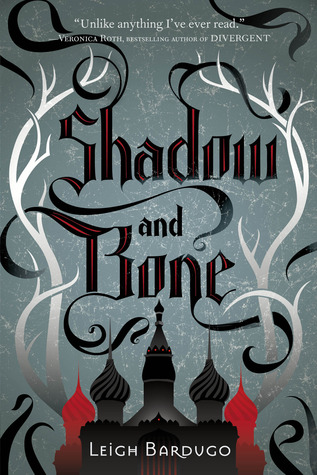
Review - Shadow & Bone by Leigh Bardugo


Shadow and Bone (The Grisha, #1)
Shadow & Bone by Leigh Bardugo
Series: The Grisha #1
Published by Henry Holt & Co on June 5 2012
Genres: Young Adult, Fantasy
Pages: 358
Rating: 2.5/5 stars
The Shadow Fold, a swathe of impenetrable darkness, crawling with monsters that feast on human flesh, is slowly destroying the once-great nation of Ravka. 
Alina, a pale, lonely orphan, discovers a unique power that thrusts her into the lavish world of the kingdom’s magical elite—the Grisha. Could she be the key to unravelling the dark fabric of the Shadow Fold and setting Ravka free? 
The Darkling, a creature of seductive charm and terrifying power, leader of the Grisha. If Alina is to fulfill her destiny, she must discover how to unlock her gift and face up to her dangerous attraction to him. 
But what of Mal, Alina’s childhood best friend? As Alina contemplates her dazzling new future, why can’t she ever quite forget him? 
And the hype machine strikes again. For a book that has received as much hype over the past two years as Shadow & Bone, I really expected something much more impressive. I’m not sure why I even bothered, as it appears that the blog hype machine is built to fail, at least for me. The only book I’ve read based on the hype surrounding it that I actually liked was Daughter of Smoke & Bone. This was no Daughter of Smoke & Bone, people.

Let’s start things off by quickly discussing the immensely irritating use of Russian culture in the worldbuilding of Shadow & Bone. It’s clear that Bardugo set out to write a fantasy novel set in a less expected locale – rather than writing about a pseudo-Europe, she chose to create an alternate universe Russia. This would have been great, if it had worked. The problem was that it was completely half-assed. The first clue that this book would piss me off was the disregard for Russian naming practices – namely the misuse of surnames throughout the book. It’s pretty common knowledge that in Russia, 'ov' surnames are masculine and 'ova' is the feminine variation. So it was rather frustrating to continually read about a main character called Alina Starkov, knowing that her name should in fact be Alina Starkova. There is also an instance in which a female character is given the male first name Ilya. And then there’s the fact that the book is chalk full of Russian stereotypes – bear rugs and squirrel hats and constant imbibing (on a drink called kvas, which is in fact a non-alcoholic beverage. Why not just call it something else??). I was also perturbed by the mixed use of real Russian words and made-up Russian-sounding words, not to mention the use of Russian words to mean completely different things. I have read some of Bardugo's defence of her decisions, in which she claims that these were conscious decisions that she made for the book, but I honestly don't think that excuses them. You can't just hide behind artistic license when it comes to things like this. There are few things that irritate me more than disrespecting other cultures, and this book does just that at every turn. I can’t imagine how I might react to it if it was my culture that was being butchered, but I can’t imagine I’d be impressed with Bardugo’s hack job.

The characters and plot were also quite lackluster. They were very reminiscent of things I’ve read a million times before – stock figures more than real individuals. This story is told in first person POV, yet I never really felt like I knew who Alina was at her core. She was constantly being manipulated and she completely lacked a backbone throughout the story. I’m getting pretty sick of the whole “chosen one” plotline, and Shadow & Bone is a good example of why. Alina discovers that she’s a Sun Summoner – the ONLY Sun Summoner – and then she does absolutely fuck all with her newfound powers. She doesn’t even try. She just sits around twiddling her thumbs and doing what people tell her to. What a waste. I was also really annoyed by the fact that the throughout the first half (or so) of the book, such a big deal is made of the fact that Alina isn't pretty - she's described as sickly looking, too thin and pale and sleep-deprived. Of course, as soon as she learns to accept & use her magic, she becomes beautiful. Because god forbid we have a main character who is anything but perfect.

I think that it would have made for a much stronger (or at least more memorable!) story if Alina had consciously decided to side with the Darkling. Not to be his slave, but to be his partner. I would have been interested in reading that book. It was impossible for me to connect with her, nor did I think that any of the other characters were any better. The only character I was somewhat interested in was Alina’s friend Genya, whose story I found quite fascinating, though we weren’t privy to many of the details of her life. 

I was unimpressed with the Darkling both as a villain and as a love interest. He was neither scary nor sexy, not to mention the fact that the dude is 120 years old. Ew. I didn’t particularly like Mal either, though. He was very hot and cold – one minute he was furious with Alina, the next distant and cold, the next thing I know he’s professing his undying love for her and willing to die to save her. Double ew. 

The plot was simply pedestrian. It was a traditional been-there-done-that light fantasy wrapped up in a bad Russian disguise. It lacked depth, and nothing shocking (or even really interesting) happened. It felt like it was just going through the motions of Typical Fantasy Novel – orphaned teenager, catching up at weird pseudo-boarding school, traveling by foot for a very long time and not getting enough to eat, big climactic moment, the end. Now, I don’t usually mind this – I’ve loved a lot of books that contain most of these elements – but there was just something forgettable about Shadow & Bone.

The one thing I enjoyed about Shadow & Bone was the writing. It was well paced and moved quickly and steadily (though that ending was just stupid). Bardugo’s use of words was simple but effective, and despite all of the frustrations I had with it, I couldn’t seem to put the book down. I’m even contemplating requesting the second book from the library, though I truly don’t know why.

It did have a very pretty map though. I like maps. It gets half a star for the map.

Monday, 2 June 2014

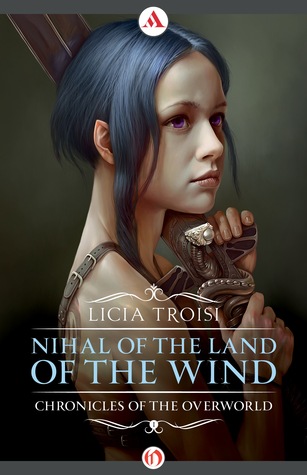
ARC Review - Nihal of the Land of the Wind by Licia Troisi


Nihal of the Land of the Wind

Nihal of the Land of the Wind by Licia Troisi

Series: Chronicles of the Overworld #1
Published by OpenRoad Media on May 27 2014
Genres: Young Adult, Fantasy
Pages: 230
Rating: 2.5/5 stars
An international bestseller from an extraordinary storyteller—get ready for Nihal and her world. 
Nihal lives in one of the many towers of the Land of the Wind. There is nobody like her in the Overworld: big violet eyes, pointed ears, and blue hair. She is an expert in swordplay and the leader of a handful of friends that includes Sennar the wizard. She has no parents; brought up by an armorer and a sorceress, Nihal seems to be from nowhere. 
Things suddenly change when the Tyrant takes charge. Nihal finds herself forced to take action when she is faced with the most difficult mission a girl her age could imagine. 
Fierce, strong, and armed with her black crystal sword, Nihal sets out to become a real warrior. Readers will be riveted as she forges her powerful path of resistance.
I received this book for free from the Publisher in exchange for an honest review. This does not affect my opinion of the book or the content of my review.
Translated into English from Italian, Licia Troisi’s debut novel gets off to a grand start. The beginning of Nihal of the Land of the Wind isn’t particularly original, but it is immersive and does an excellent job of introducing the reader to both the extensive setting and many of the important characters. It isn’t until the second half of the novel that everything starts to fall apart.

As a child, Nihal is intrinsically likeable. The daughter of a renowned blacksmith, Nihal’s favourite hobby is playing at war with the other neighbourhood children (all boys, because apparently no other girls want to engage in pretend battles). She is free spirited and independent and tenacious. When she is bested in combat by a sorcerer (she forgot to stipulate that there be no magic in their fight), Nihal decides to learn magic in order to be the best warrior she can be. However, this is where Nihal’s likeable/sympathetic traits end. I spend most of the novel irritated by Nihal’s behaviour. She grows from a tenacious child to a ruthless and narrow-minded young woman, throwing her all into killing. Despite what the book seems to suggest, I never really felt like Nihal learned that her attitude towards war was a detriment to herself and everyone around her. She was incapable of helping anyone but herself, and it was dangerous.

The only character I really liked or sympathized with was Sennar, and even he was particularly memorable. I found his crush on Nihal very frustrating because I was so hoping to see a book in which a young girl and a young boy can be friends without developing romantic feelings for one another. On a similar note, I wish that Nihal hadn’t had a crush on Fen. It would have been much more interesting for her to simply admire him and aspire to be like him without that element.

The plot was quite predictable. I found it to have echoes of Tamora Pierce and Mercedes Lackey’s popular ‘80s series, but it didn’t live up to the high bar that those two incredible women set. The writing, while not distractingly bad, wasn’t particularly interesting or notable in any way. The world building, on the other hand, was quite impressive. It was particularly well-integrated for the first book in a series. It was very vivid and for the most part was well thought out.

I don’t think that I’d actively recommend this as do think that the negatives outweigh the positives, but it depends on what the reader is looking for in the book. Unfortunately, I simply didn’t find it particularly memorable or original.

Friday, 2 August 2013

Review - The Poison Eaters and Other Stories by Holly Black


The Poison Eaters and Other Stories
Series: Standalone
Published by Big Mouth House on April 1 2010
Genres: Fantasy, Young Adult, Short Stories
Pages: 212
Rating: 2.5/5 stars

Pick your poison: Vampires, devils, werewolves, faeries, or . . . ? Find them all here in Holly Black’s amazing first collection.
In her debut collection, New York Times best-selling author Holly Black returns to the world of Tithe in two darkly exquisite new tales. Then Black takes readers on a tour of a faerie market and introduces a girl poisonous to the touch and another who challenges the devil to a competitive eating match. Some of these stories have been published in anthologies such as 21 Proms, The Faery Reel, and The Restless Dead, and many have been reprinted in many “Best of ” anthologies. 
The Poison Eaters is Holly Black’s much-anticipated first collection, and her ability to stare into the void—and to find humanity and humor there—will speak to young adult and adult readers alike.


The Coldest Girl in Coldtown – ****
I didn’t actually read this one, because I read it online a few months ago (I found a link to it on Holly’s tumblr). I remember really liking it when I read it, though it was quite unbelievable. I found that to be part of its charm. I’m really looking forward to reading the full-length novel Holly wrote, expanding on this lovely short story.

A Reversal of Fortune - ***
My biggest complaint regarding A Reversal of Fortune was that it was too short. It didn’t feel resolved, and I wasn’t happy with the wide open ending that was given. It felt more like a tiny glimpse into Nikki’s life than a complete story, and I just wanted more. The descriptions of Nikki’s trailer park and the bus and the candy store where she worked were captivating and spot-on. I really felt like she was someone I could know.

The Boy who Cried Wolf - ***
Again, it was just too short! It felt incomplete, though I did like the Little Red Riding Hood tie-in at the end. Clever Holly. I really liked Alex too, as a narrator. He reminded me of Max Braverman from Parenthood, with his fixation on facts. It was a bit predictable, unfortunately.

The Night Market - ****
One of my favourites. I adore the fact that the main character is a WOC and that it takes place in the Philippines. I love the exploration of cultures other than my own, and thought that it was well done here. I thought the ekanto (elf) was quite fascinating and very cunning, and I was drawn in within a few sentences. The end of the story was satisfying, which was a nice turn of events from the last few stories.

The Dog King - ***
I loved that this used a different style of storytelling. It was less personal than most of Holly’s work, playing on the style of classic high fantasy narratives. It was an interesting and original story, and got the creepy factor down pat.

The Virgin - **
I don’t really know what the story was here. It fell flat for me. Maybe I wasn’t reading closely enough, but I didn’t know what was going on half the time. I really liked the beginning, but it got boring quickly. The MC was kind of an asshole, too.

In Vodka Veritas - **
I liked it, but it felt a little bit derivative. It didn’t really feel like it had much in terms of originality, though the narrator was engaging and the attention to detail was (as always) superb. It was on the wrong side of silly and whimsical for me, though I loved the use of Roman/Greek mythology. I was a little stumped by the fact that the Latin teacher told the MC that Dionysus was the Latin name and Bacchus the Greek, because it’s actually the other way around. That may have been intentional, though.

The Coat of Stars – ***
Cute, but otherwise kind of forgettable. The fact that Rafe wasn’t a teenager was refreshing, though it seemed a little bit out of place in this selection of stories. It had a very somber tone, which following In Vodka Veritas didn’t really work for me. It was too much of a sudden change of pace. I did like the length of this one; it felt like a complete story and not just a snippet of one.

Paper Cuts Scissors – *****
My favourite of the bunch. There was literally nothing I disliked here. It was a great length (though it could have been longer), it featured awesome characters, and best of all – it was about book characters coming to life and interacting with one another. I’d be crazy not to like that. I also really loved the ending. The fact that Justin doesn’t force anything on Linda makes me very happy. He tells her how he feels and provides her with the means to do what she sees fit. He gives her the space to make her own choice, even though he feels like it’s a mistake.

Going Ironside – **
I liked the feeling of madness and the fact that it was from a non-human POV, but it was ridiculously boring. Absolutely nothing happened.

The Land of Heart’s Desires – **
It’s been like 4 years since I’ve read any of the Tithe books, and it showed. I recognised most of the characters, but it was totally unfamiliar to me. It took pretty much the entire story just for me to remember anything about the books and the characters. It just didn’t particularly capture my interest, though I imagine that lovers of Tithe, Valiant, and Ironside will appreciate it more than I.

The Poison Eaters – ***
I can’t quite put my finger on what it was about the final story that I found off-putting. For the most part, I liked it, but I couldn’t shake the niggling feeling that something wasn’t quite right. The idea itself is fantastic – creating human weapons, girls who kill anything that comes in contact with their bare skin. But something just didn’t feel quite right.